Small Home Improvement Ideas That Actually Change How a Room Feels
When people search for small home improvement ideas, they usually aren’t asking for a list of cheap tricks.
They’re asking a more specific question: how do you make a compact room, a narrow hallway, or a one bedroom apartment actually feel and function better, without tearing out walls or hiring a crew for six weeks.
I usually recommend starting with that distinction, because a lot of advice online treats “small” as a synonym for “budget,” and the two aren’t the same thing at all.
A small project can still involve a real investment. What makes it small is the scale of the space you’re working with, not the size of the check you’re writing.
I find it useful to think about compact spaces in terms of what’s working against you. Limited square footage means every piece of furniture, every shadow, and every cluttered surface has more visual weight than it would in a larger room. That’s the problem these ideas are meant to solve.
Small Living Rooms and Bedrooms: Work With the Walls, Not Just the Floor
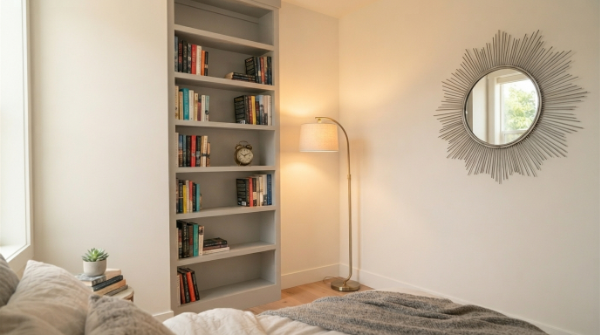
Most small rooms are underused vertically. Floor space gets all the attention, while wall space above eye level sits empty. Also read Home Improvement Ideas on a Budget: A Room by Room Planning Guide.
Adding a tall, narrow bookshelf or floating shelves near the ceiling gives you storage without eating into your walking area. This is one of the simplest ways to add function to a small bedroom or living room without shrinking the room itself.
Lighting matters more in small spaces than people expect. A single overhead fixture tends to flatten a room and make it feel boxier.
Layering in a floor lamp, a wall sconce, or even battery powered puck lights under a shelf creates depth. Rooms with varied light sources read as larger because your eye moves around instead of stopping at one flat ceiling glow.
Mirrors are almost a cliché at this point, but they work for a real reason: they bounce light and visually double a sightline.
Placed across from a window, a mid sized mirror can noticeably brighten a small bedroom without adding a single extra fixture.
Small Kitchens: Reclaim the Vertical and the Awkward
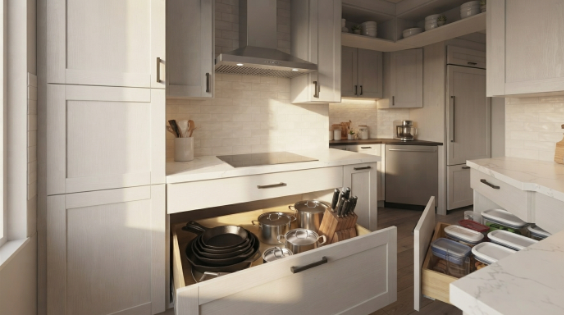
Compact kitchens usually have wasted vertical space above cabinets and underused space inside cabinets themselves.
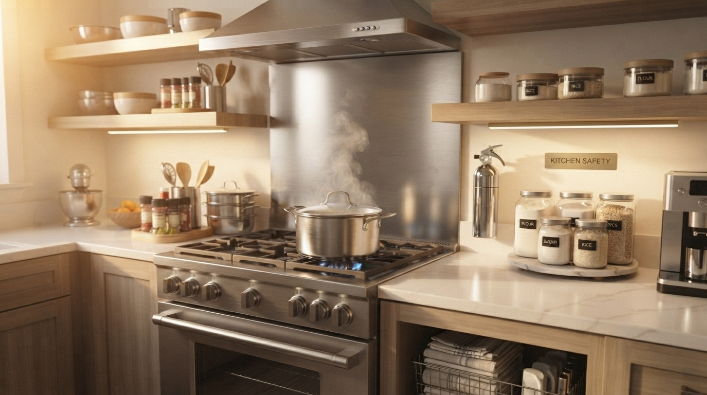
Adding a slim rolling cart, a magnetic knife strip, or stackable shelf risers inside cabinets can meaningfully increase usable storage without any construction.
I usually suggest starting with the inside of cabinets before adding anything new to the room, since most small kitchens have more hidden capacity than people realize.
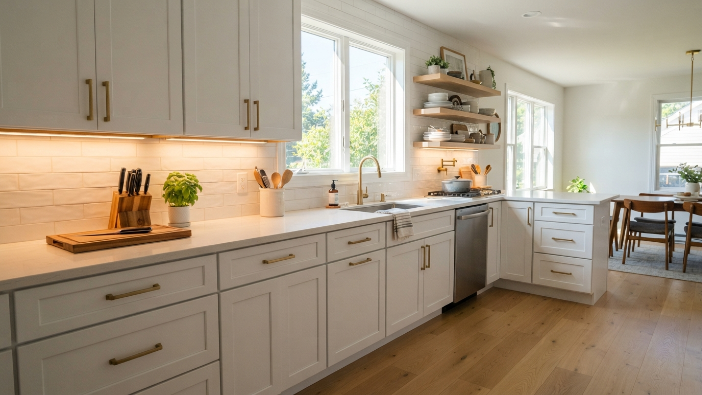
Cabinet hardware is another small upgrade with outsized impact. Swapping dated pulls for simple, consistent hardware changes the entire visual tone of a kitchen in an afternoon.
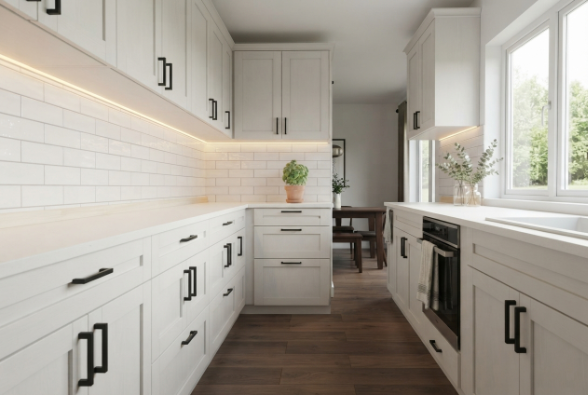
Hypothetical scenario: Picture a narrow galley kitchen in an older apartment, the kind with one small window and barely enough counter space for a cutting board.
Adding a light colored backsplash, replacing the overhead bulb with a brighter, warmer LED, and installing a magnetic strip for knives instead of a bulky block on the counter could realistically free up several inches of usable counter space while making the room feel less closed in. None of that requires a permit or a contractor.
Small Bathrooms: Reduce Visual Clutter First
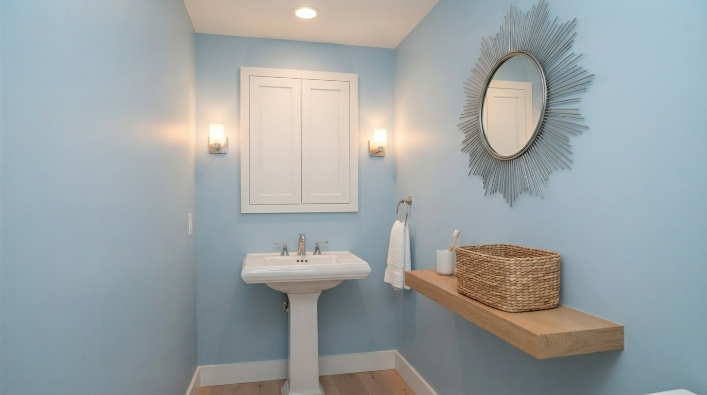
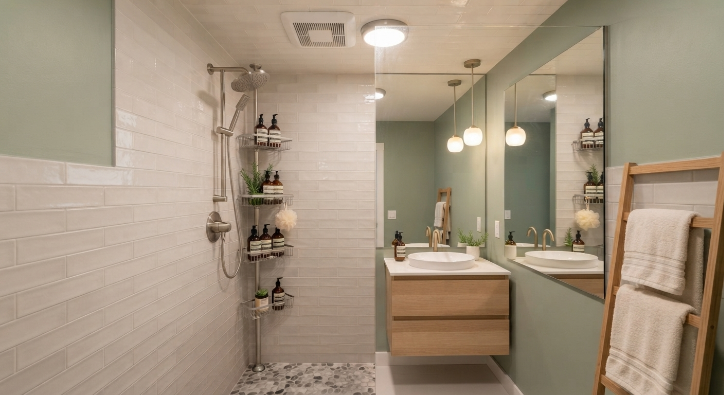
Small bathrooms suffer from clutter faster than any other room in the house, simply because there’s nowhere for anything to hide.
A wall mounted cabinet, a small shelf above the toilet, or an over the door organizer can clear counter space that makes the whole room read as larger.
Fixture upgrades are worth mentioning here too. If you’re replacing a showerhead or faucet anyway, water efficient models labeled under the EPA’s WaterSense program are designed to maintain normal water pressure while using less water, which is a practical consideration in any bathroom, small or large.
Paint color has a real effect in small bathrooms specifically because the room has so little else going on visually. Lighter, cooler tones tend to make tiled or tiled adjacent bathrooms feel less cramped than deep, saturated colors, though this is partly a matter of personal taste rather than a hard rule.
Entryways and Small Balconies: Don’t Ignore the In Between Spaces
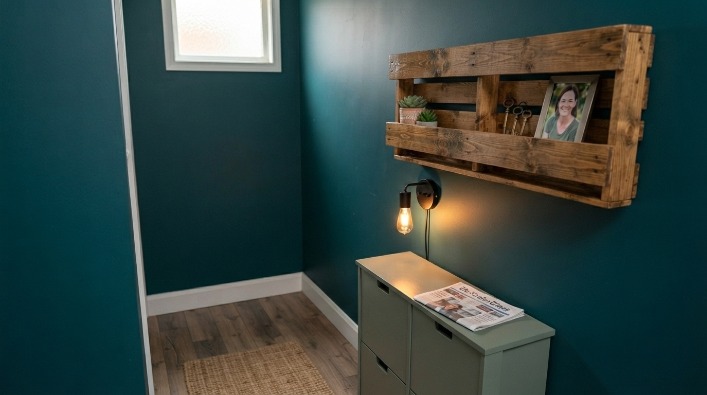
Entryways are often the smallest, most neglected part of a home, yet they’re the first thing anyone sees. A slim console table, a wall hook rail, and a small mirror can turn a bare hallway into a space that actually does something useful, catching keys, shoes, and bags before they end up scattered through the rest of the house.
Small balconies benefit from the same vertical thinking as small kitchens. Railing planters and wall mounted storage keep the floor clear enough to actually stand and use the space, rather than turning it into a place where things get stored and forgotten.
[Internal Link: Small Space Home Improvement Guide]
Real Life Example: What Small Space Design Actually Prioritizes
Public housing and micro apartment design research consistently points to the same conclusion: in constrained square footage, storage that goes up rather than out, and furniture that serves more than one purpose, tends to matter more than any single decorative choice.
This is a principle you’ll see reflected in guidance from housing and design organizations that study compact living, and it holds up whether you’re in a 400 square foot studio or a small bedroom in a larger house.
The takeaway for a homeowner isn’t to copy a specific layout, it’s to apply the same logic: identify your vertical space before you buy anything new.
Frequently Asked Questions
What counts as a small home improvement idea versus a regular renovation?
A small home improvement idea generally refers to a change scaled to a compact room or limited square footage, like adding vertical storage, updating lighting, or reorganizing a small kitchen, rather than a structural renovation involving permits, plumbing, or electrical rerouting.
Do small home improvement ideas have to be cheap?
Not necessarily. Some, like adding a mirror or reorganizing cabinet storage, cost very little. Others, like installing new bathroom fixtures or built in shelving, involve a real budget even though the physical footprint of the project stays small.
How can I make a small bedroom feel bigger without adding furniture?
Focus on light and reflection first. A well placed mirror, a lighter wall color, and layered lighting instead of one overhead fixture can visually open up a small bedroom without adding a single new piece of furniture.
What is the easiest small kitchen upgrade for someone renting?
Cabinet organizers, a magnetic knife strip, and swapping in a peel and stick backsplash where allowed are all changes that don’t require permanent alteration and can typically be reversed before moving out.
Are vertical storage solutions actually more effective than floor storage in small rooms?
In most compact spaces, yes. Floor space directly affects how open a room feels and how easily you can move through it, so shifting storage upward tends to preserve both function and the sense of space.
Do small bathroom upgrades affect water usage?
They can. Replacing older fixtures with WaterSense labeled faucets or showerheads maintains normal performance while using less water, which is worth considering during any small bathroom refresh.
Conclusion
Small home improvement ideas work best when you stop thinking about square footage as a limitation and start thinking about it as a design constraint you’re solving for.
The rooms that feel the most functional after a small scale update usually aren’t the ones with the most new furniture, they’re the ones where storage, light, and clutter were addressed deliberately.
My approach is always to start with what’s already underused, whether that’s vertical wall space, the inside of a cabinet, or a neglected entryway, before spending on anything new.
If you’re working with a compact home, apartment, or single small room, pick one section of this article and start there. You’ll likely notice the difference before you’ve finished the second project.