Simple Home Improvement Ideas You Can Actually Finish Without Overthinking Them
Simple home improvement ideas get requested a lot, but the term means something specific. It’s not the same as asking for beginner projects, and it’s not the same as asking for cheap ones either.
What people usually want is a change they can plan, execute, and finish without a complicated process getting in the way. My approach when I look at a project is to ask one question first: how many decisions does this actually require?
If the answer is one or two, it probably qualifies as simple. If you need to choose materials, colors, sizes, and installation methods before you even start, that’s a different category of project entirely, even if the end result looks modest.
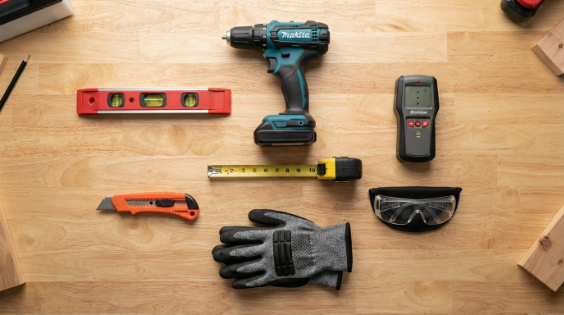
The projects below share a few traits. They use basic tools most households already own or can borrow cheaply.
They don’t require specialized knowledge to get a decent result. And critically, they’re hard to mess up in a way that costs you real time or money if something goes wrong.
Painting Small Sections Instead of Full Rooms
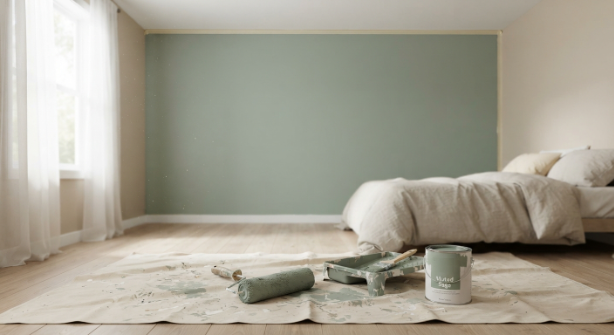
A full room repaint is a legitimate project, but it’s not a simple one once you factor in furniture moving, taping, multiple coats, and drying time.
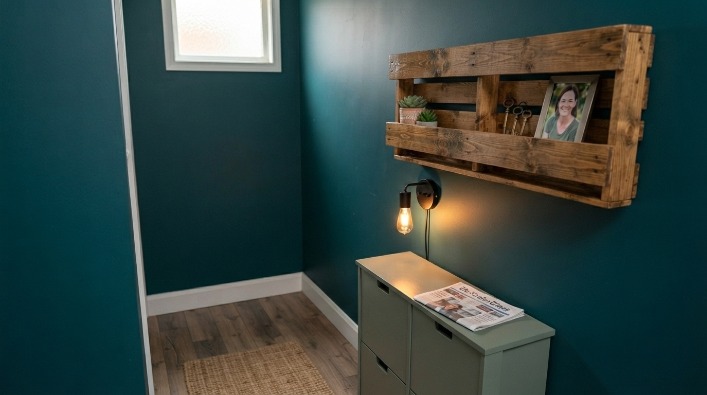
A simpler version of the same idea is painting a single accent wall, a door, or trim. The prep work shrinks dramatically, the drying time is shorter, and mistakes are easier to fix because you’re covering less surface area.
One thing I would consider first is surface prep, even for a small painted area, because skipping it is the single most common reason a simple paint job looks unfinished. Cleaning the surface and letting it dry fully before painting makes a bigger visual difference than the paint quality itself.
Hardware and Fixture Swaps
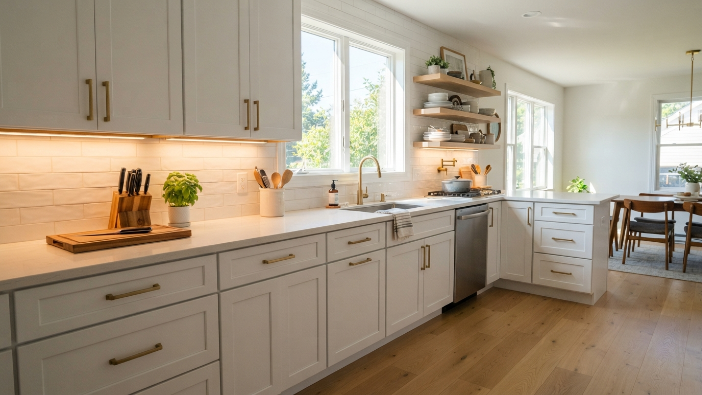
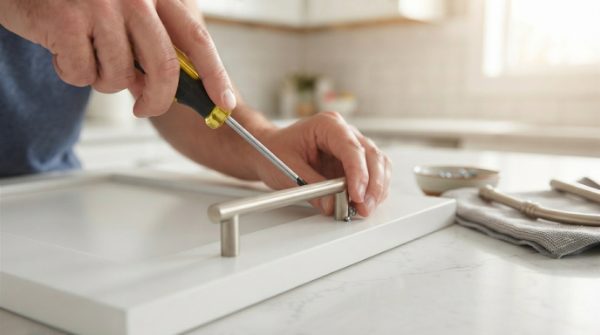
Replacing cabinet pulls, door handles, or a light fixture cover plate is about as close to a purely simple project as home improvement gets.
The tools involved are usually a screwdriver and sometimes a drill, the time investment is measured in minutes per item, and there’s very little that can go seriously wrong.
Where people occasionally complicate this unnecessarily is by not measuring hole spacing before ordering new hardware.
Cabinet pulls in particular come in different center to center measurements, and buying a mismatched size turns a fifteen minute project into a frustrating return trip to the hardware store.
Lighting Upgrades Without Rewiring
Swapping bulbs for warmer or cooler color temperatures, adding a plug in wall sconce, or installing battery powered under cabinet lighting are all changes that alter the feel of a room significantly without touching any wiring.
This matters because anything involving new electrical wiring moves out of simple territory and into work that typically calls for a licensed electrician, both for safety and for code compliance.
Storage and Organization That Doesn’t Require Building Anything
Adding closet organizers, over the door hooks, or drawer dividers is a simple project in the truest sense: no tools beyond a tape measure in many cases, no permanent alteration, and results you see immediately.
I usually recommend measuring the actual space before buying organizational products, since the most common mistake here isn’t difficulty, it’s guessing at dimensions and ending up with something that doesn’t fit.
Sealing Drafts and Small Maintenance Fixes
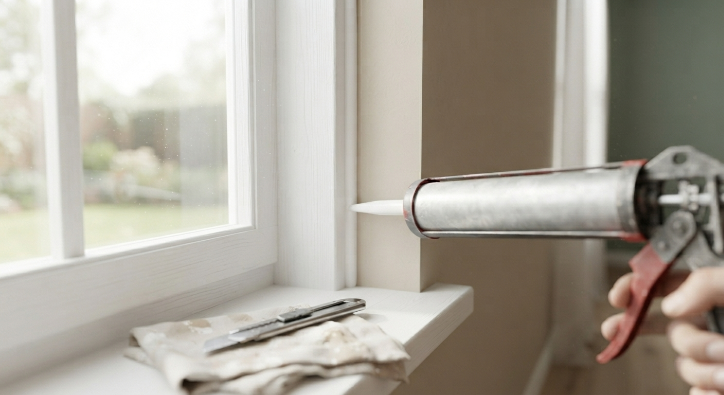
Caulking around a window frame or applying weatherstripping to a door is genuinely simple work, and it has a practical payoff beyond appearance.
According to guidance from the U.S. Department of Energy on sealing air leaks with caulk, sealing common leak points around a home is one of the more cost effective ways to reduce drafts and improve comfort in a room, and it typically takes a caulking gun, a utility knife, and under an hour per window.
The mistake that makes this harder than it should be is applying caulk over old, cracked caulk instead of removing it first. Fresh caulk applied over failing material tends to fail again quickly, so the actual simple version of this project always starts with cleaning the surface first.
Hypothetical scenario: Consider a homeowner who notices a draft near a bedroom window every winter. A simple fix, removing the old cracked caulk with a utility knife, wiping the frame clean, and applying a new bead of caulk, takes under an hour and directly addresses the problem, compared to a more complicated (and unnecessary) decision to replace the entire window.
Common Mistakes That Turn Simple Projects Complicated
The most consistent mistake I see in simple projects is skipping measurement. Whether it’s hardware spacing, shelf width, or paint quantity, guessing instead of measuring is what turns a straightforward task into a repeat trip to the store.
The second most common mistake is starting a project without checking whether the surface or area needs cleaning or prep first. Prep work rarely takes long, but skipping it is the fastest way to end up redoing a simple task.
Frequently Asked Questions
What makes a project count as one of the simple home improvement ideas rather than a complex one?
The number of decisions and tools involved matters more than the size of the result. Simple home improvement ideas typically involve basic tools, a short timeline, and few material choices, even if the visual impact is noticeable.
Do simple home improvement projects still require any planning?
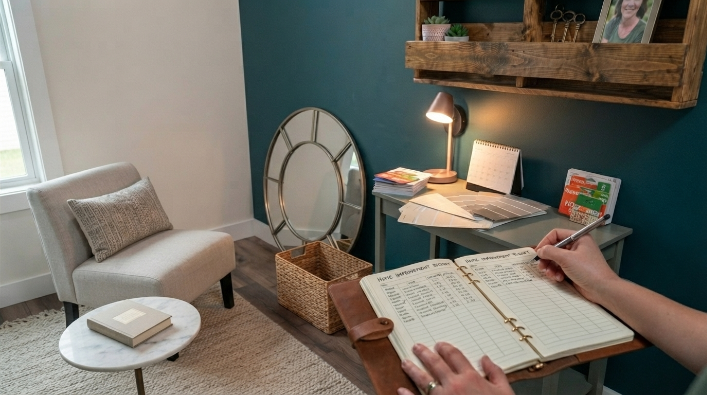
A small amount, mainly measuring and gathering the right materials beforehand. Skipping this step is the most common reason a simple project takes longer than expected.
Can simple home improvement ideas increase home value?
Cosmetic updates like hardware, lighting, and small paint projects are generally considered low cost ways to refresh a home’s appearance, though value impact varies by market, home condition, and buyer preference, so it’s not something to count on precisely.
Is painting a full room considered a simple project?
Not usually. A full room repaint involves more prep, more drying time between coats, and more furniture movement than a smaller painted section, which is why this article focuses on accent areas rather than entire rooms.
What tools do most simple home improvement projects require?
A basic toolkit covers most of them: a screwdriver, a tape measure, a utility knife, and sometimes a caulking gun or drill. Very few simple projects require specialty equipment.
Is caulking a window considered a simple or advanced task?
It’s one of the more approachable maintenance tasks in this category, as long as old caulk is removed first and the surface is clean and dry before applying new caulk.
Conclusion
Simple home improvement ideas hold up best when you resist the urge to add extra steps that weren’t necessary in the first place.
The projects that stay simple are the ones where you measure before buying, clean before applying, and choose a scope you can actually finish in one sitting.
In my research into what separates a smooth simple project from a frustrating one, it almost always comes back to preparation rather than skill.
Pick one of the ideas above, keep the scope tight, and you’ll likely find that simple home improvement ideas earn their name for a reason.