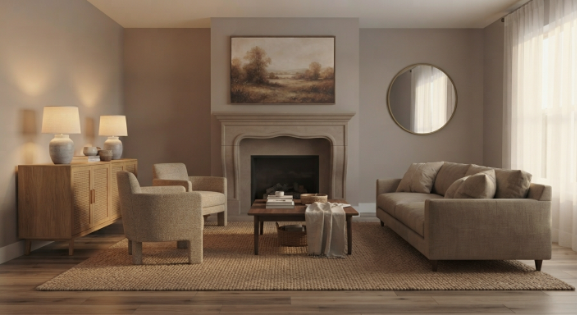
Living Room Improvement Ideas for Comfort, Function, and Style
The living room carries more pressure than almost any other room in the house. It needs to be comfortable enough for a slow Sunday, functional enough for daily life, and put together enough for guests.
My approach to living room improvement ideas is to treat comfort and function as equal partners to appearance, since a beautiful living room that’s awkward to move through or uncomfortable to sit in doesn’t actually work as a living room.
Start With Furniture Layout
Layout is the foundation everything else builds on. One thing I would prioritize before buying anything new is figuring out the natural traffic flow through the room, meaning the paths people actually walk to get from the doorway to the kitchen, hallway, or other exits. Furniture should work around that flow, not block it.
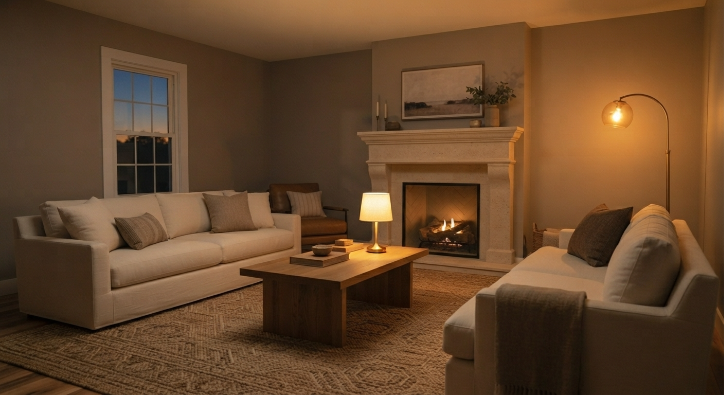
For most living rooms, angling seating toward a shared focal point, whether that’s a fireplace, a window, or simply the center of the room, creates a more natural conversation area than lining furniture against the walls.
Leaving at least a couple feet of walking space around major pieces keeps the room from feeling cramped even when it’s fully furnished.
Seating and Comfort
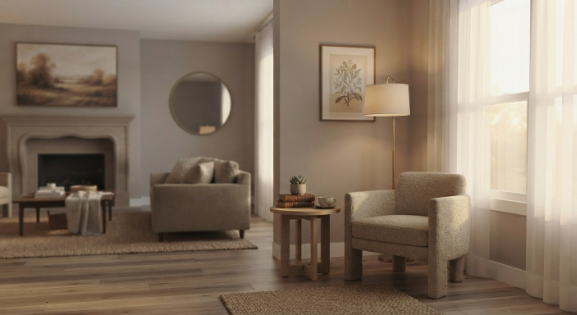
Seating is where function and comfort intersect most directly. A sofa that looks right in photos but sags after a year isn’t actually an improvement. Also read Small Home Improvement Ideas That Actually Change How a Room Feels.
My approach is to prioritize seat depth and cushion support over trend driven upholstery choices, since comfort is what determines whether a living room actually gets used daily.
For smaller living rooms, a loveseat paired with an armchair or two often creates more flexible seating than a single oversized sectional. For larger rooms, a sectional can anchor the space without needing several separate furniture pieces to fill it.
Lighting
Living room lighting works best in layers rather than relying on a single overhead fixture. Ambient lighting from an overhead source, task lighting from a floor or table lamp near reading areas, and accent lighting highlighting art or shelving together create a room that feels good at any hour.
The Department of Energy notes that efficient LED lighting choices reduce household electricity costs while still offering warm, comfortable light options, which makes layered lighting more practical than it used to be.
Natural light also shapes how a living room feels. Rooms with limited natural light benefit from lighter wall colors and strategically placed mirrors to bounce available daylight around the space, while rooms with abundant natural light have more flexibility with deeper, richer colors.
Walls and Paint Colors
Paint color choice in the living room depends heavily on room size, natural light, and existing furniture. Small living rooms with limited light generally read better in soft, warm neutrals that keep the space feeling open.
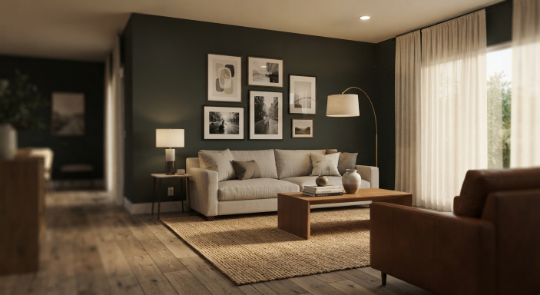
Larger, brighter living rooms can support deeper colors like navy, forest green, or warm terracotta without feeling closed in.
If your existing furniture is a fixed investment, choosing wall color to complement it rather than fighting against it saves both money and frustration.
Flooring and Rugs
Flooring sets the tone underfoot, but for most improvement projects, a well chosen area rug does more immediate work than replacing the floor itself.
A rug that’s too small is one of the most common living room mistakes I see, since it visually shrinks the seating area instead of anchoring it. As a general guide, front furniture legs should rest on the rug rather than floating just off its edge.
Curtains
Curtains hung close to the ceiling and extending slightly beyond the window frame make windows look larger and ceilings feel taller, which benefits both small and large living rooms.
Lighter fabrics suit rooms that need to preserve natural light, while heavier fabrics add warmth and help with sound in larger, more open living rooms.
Storage and Shelving
Living room clutter usually comes down to a lack of dedicated storage rather than too much stuff. Built in or freestanding shelving, a media console with closed storage, and baskets for smaller items give everyday clutter a home instead of letting it collect on surfaces.
In family living rooms, low accessible storage for frequently used items works better than high shelving that requires reaching.
TV Placement
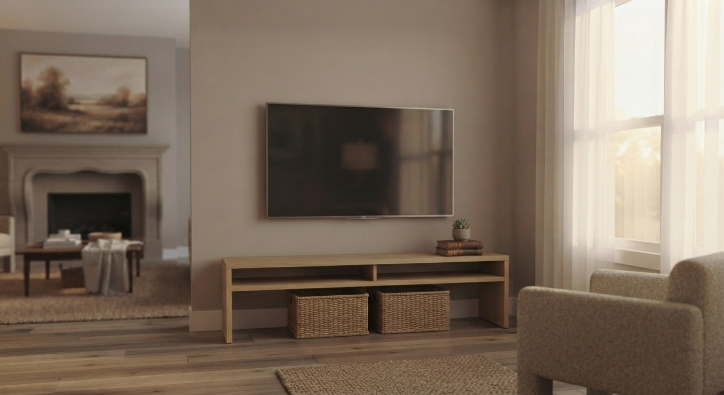
TV placement affects both function and safety. Mounting a television at seated eye level generally reduces neck strain during regular use.
If a TV sits on furniture rather than being wall mounted, securing it properly matters more than most people realize.
The Consumer Product Safety Commission’s Anchor It! campaign highlights how furniture and TV tip overs remain a serious household hazard, particularly for homes with young children, and recommends anchoring TVs and top heavy furniture securely to the wall.
Wall Art and Decorative Elements
Art and decor work best when scaled to the wall they’re on rather than chosen independently.
A single small frame on a large wall tends to look lost, while a gallery arrangement or one larger statement piece fills the same space more intentionally. I usually hang art so the center sits around eye level for a standing adult, which keeps the room feeling proportional.
Small Living Rooms
Small living room improvement often comes down to restraint rather than clever tricks. Choosing fewer, well proportioned furniture pieces over many small ones makes a compact room feel more open. Multi purpose furniture, like a storage ottoman that doubles as a coffee table, helps a small room do more without feeling crowded.
Large Living Rooms
Large living rooms face the opposite challenge: avoiding a scattered, underfurnished feel. Creating distinct zones, such as a conversation area near the seating and a separate reading nook near a window, helps a large room feel intentional rather than empty in the middle.
Family Friendly Considerations
Family living rooms benefit from durable, easy to clean upholstery fabrics, rounded furniture edges where young children are present, and secured furniture and electronics as noted above.
Low, accessible storage for toys and games keeps daily clutter manageable without requiring constant reorganizing.
Real Life Example: A Hypothetical Small Living Room Improvement
Consider a hypothetical small living room that feels cramped despite modest furniture. By replacing an undersized rug with a properly scaled one, angling the sofa and chair toward each other instead of against opposite walls, and adding a floor lamp to reduce reliance on a single overhead light, the room reads as noticeably larger and more comfortable, without a single piece of furniture being removed or replaced.
This kind of layout and lighting focused adjustment is, in my research, often more effective for small rooms than buying additional furniture.
Common Living Room Mistakes
Undersized rugs, furniture pushed entirely against the walls, single source overhead lighting, and unsecured televisions on furniture are the most frequent issues I come across.
Each one is fixable without a major renovation, which is part of what makes the living room such a rewarding room to improve.
FAQs
What are simple living room improvement ideas for a small space?
Choosing a properly scaled rug, angling furniture toward a focal point, and adding layered lighting typically improve a small living room more than adding extra furniture.
How do I make my living room feel less cluttered?
Dedicated storage like shelving, closed media consoles, and baskets for smaller items usually solves clutter more effectively than decluttering alone, since items need a consistent place to go.
What size rug should I use in a living room?
As a general guide, front furniture legs should rest on the rug rather than floating off its edge, which helps the rug properly anchor the seating area.
Is it safe to place a TV on furniture instead of mounting it?
It can be, as long as the TV and furniture are properly anchored to the wall, especially in homes with young children, since tip overs remain a real household hazard.
How should I arrange furniture in a large living room?
Creating distinct zones, such as a seating area and a separate reading nook, generally works better in large rooms than filling the space with a single furniture grouping.
What living room improvement ideas work well for families with kids?
Durable upholstery, rounded furniture edges, low accessible storage, and securely anchored furniture and TVs are especially useful in family living rooms.
How does natural light affect living room paint color choices?
Rooms with limited natural light generally suit lighter, warmer colors to preserve openness, while brighter rooms can support deeper, richer tones.
Making the Living Room Work Harder
Living room improvement ideas succeed when comfort, function, and appearance are treated as connected goals rather than separate projects.
Start with layout and traffic flow, layer in proper lighting, choose a rug that actually fits the space, and don’t overlook the safety basics like anchoring a TV.
Whether your living room is compact or expansive, family focused or quiet, these adjustments make the room work better for the life actually happening in it.