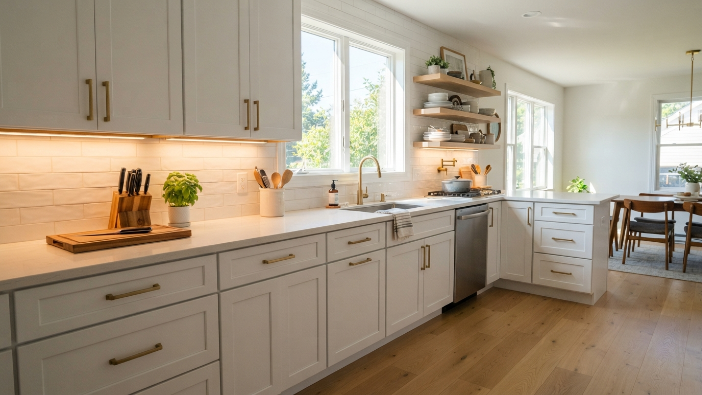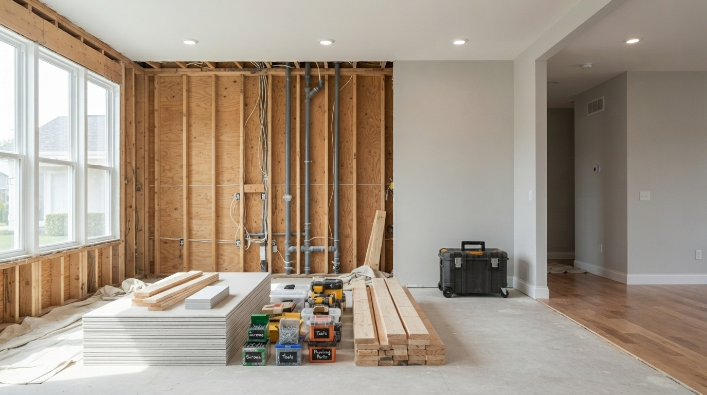
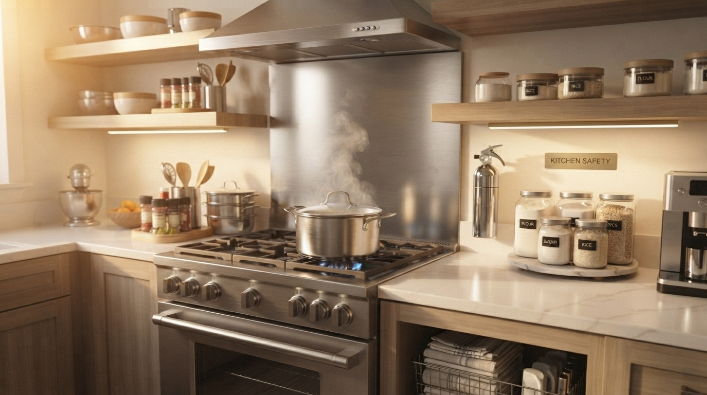
Kitchen Improvement Ideas That Actually Make Your Kitchen Work Better
When people ask me for kitchen improvement ideas, they are almost never asking for a full renovation.
They want the kitchen they already have to work harder for them: more counter space to actually use, better lighting for chopping vegetables at 6pm, cabinets that do not spill their contents every time you open a door.
That is the angle I want to take here. This is not a gut renovation guide. It is a practical look at the upgrades that make a kitchen more functional, organized, and pleasant to spend time in, whether you own the home or are just tired of fighting your own storage.
I usually start any kitchen assessment the same way: by watching how someone actually moves through the space while cooking. The layout, not the paint color, is almost always the first thing worth addressing.
Start With Layout and Workflow, Not Decor
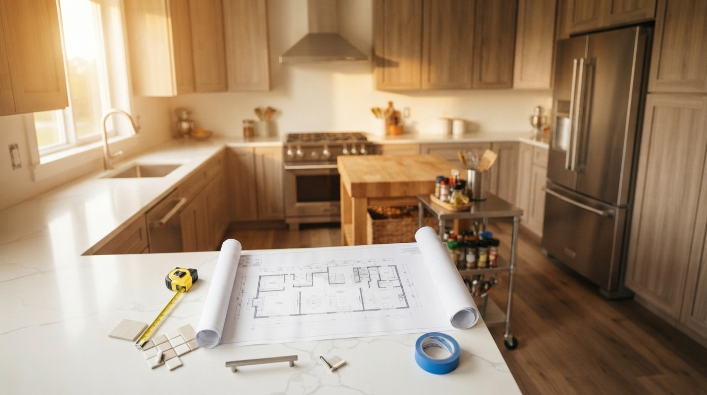
Every kitchen has a natural path between the sink, the stove, and the refrigerator. Designers sometimes call this the kitchen work triangle, and while the term has become a bit old fashioned, the underlying idea still holds up: you want short, unobstructed paths between the places you prep, cook, and clean up.
If you constantly have to walk around an island or reach across a hot burner to get to the sink, that is a workflow problem, not a cosmetic one.
Small layout improvements can include:
- Rehanging a cabinet door so it does not block a walkway when open
- Moving frequently used tools closer to where they are actually used
- Creating a dedicated landing spot for hot pans right next to the stove
- Adding a rolling cart to extend counter space without a full remodel
My approach is to fix the flow before I even think about new countertops or backsplash tile, because a beautiful kitchen that fights you every time you cook will still feel frustrating.
Storage and Organization Improvements
Storage is usually where kitchen improvement ideas have the biggest visible impact for the least amount of money. Most kitchens do not actually lack storage. They lack organized storage.
Consider these targeted upgrades:
- Pull out drawer organizers for utensils, spices, and lids
- Vertical dividers for baking sheets and cutting boards
- Lazy Susans or turntables for deep corner cabinets
- A dedicated pantry organization system with labeled bins and clear containers
- Under sink pull out trays to make use of awkward plumbing space
One detail I would not overlook is door and drawer hardware. New cabinet hardware is inexpensive relative to the visual difference it makes, and it also affects daily usability.
Handles that are easier to grip matter more than people expect, especially in households with children or older adults. Also read Small Kitchen Renovation Ideas for Planning a More Substantial Remodel.
Countertops, Backsplash, and Sink Area
If your cabinets and layout are functioning reasonably well, countertops and the sink area are often the next logical step. You do not need to replace an entire countertop to improve this zone. Refinishing existing counters, adding a cutting board insert near the sink, or upgrading an old faucet to one with a pull down sprayer can meaningfully improve daily use.
A backsplash update is one of the more satisfying kitchen improvement ideas because it touches both function and appearance. Beyond looks, a proper backsplash protects the wall from grease and water splashes, which matters for long term maintenance.
For the sink itself, pay attention to faucet placement and reach. A faucet that cannot comfortably reach the back corners of a large sink basin creates a daily annoyance that a lot of homeowners simply tolerate without realizing it can be fixed.
Lighting: Task Lighting, Ambient Lighting, and Natural Light
Kitchen lighting deserves its own category because most kitchens are underlit for the actual tasks people perform there. A single ceiling fixture is rarely enough.
Layered lighting typically includes:
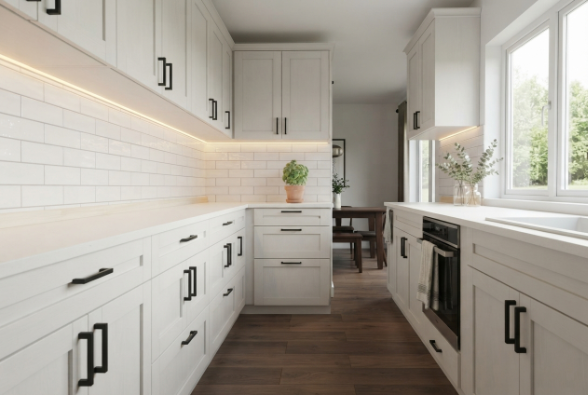
- Task lighting under cabinets, aimed directly at counters and cutting surfaces
- Ambient lighting from ceiling fixtures or recessed cans for general illumination
- Accent lighting inside glass front cabinets or above open shelving
- Natural light, maximized by keeping window areas clear of clutter and heavy curtains
In my research into kitchen lighting, under cabinet task lighting comes up again and again as one of the highest impact, lowest disruption upgrades available. It is usually a straightforward install, and it removes shadows cast by your own body while working at the counter.
Appliances, Energy Efficiency, and Maintenance
Appliances are often the biggest ticket item in a kitchen improvement plan, so it helps to prioritize based on actual need rather than trend.
If your refrigerator or dishwasher is more than ten to fifteen years old, newer models are frequently far more energy efficient, which affects both your utility bill and your environmental footprint.
The U.S. Department of Energy’s kitchen appliance energy saving guidance points out that choosing a properly sized refrigerator and keeping range top burners and reflectors clean are simple habits that keep everyday energy use down, which is a good reminder that maintenance matters just as much as the appliance itself.
Routine maintenance that extends appliance life and improves safety includes:
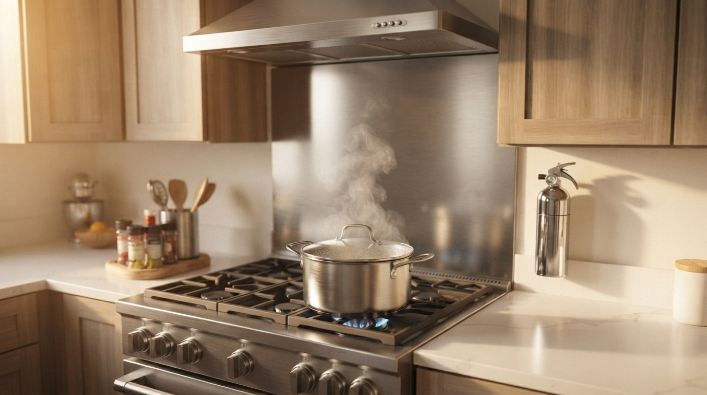
- Cleaning range hood filters regularly to maintain proper ventilation
- Checking oven door seals for wear
- Clearing lint and debris from behind and under appliances
- Testing smoke detectors near the kitchen, since cooking is a leading cause of home fires
On that note, the National Fire Protection Association maintains detailed home cooking fire safety guidance that is worth reviewing, particularly around never leaving a stovetop unattended while simmering, frying, or broiling.
Decorative and Functional Finishing Touches
Once the functional layer is addressed, decorative kitchen improvement ideas can make the space feel finished.
Open shelving, a fresh coat of paint on cabinets, updated light fixture covers, and a well placed rug near the sink all contribute to a kitchen that feels intentional rather than accumulated over time.
I find it helpful to think of decorative changes as the last ten percent of a kitchen improvement project, not the first move. A gorgeous light fixture over a cluttered, poorly organized counter will not solve the underlying problem.
Practical Homeowner Scenario
Here is a hypothetical scenario that reflects a common situation. Imagine a homeowner with a fifteen year old kitchen: functional cabinets, dated hardware, poor task lighting, and a single overhead fixture that leaves the counters dim in the evening.
Instead of a full remodel, they focus on four specific improvements: adding under cabinet LED lighting, replacing cabinet hardware, installing pull out drawer organizers, and repainting the cabinet doors.
The total project addresses workflow, storage, appearance, and lighting without touching plumbing, electrical wiring, or layout. This kind of staged improvement plan is realistic for many homeowners working within a limited budget and timeline.
Prioritizing Improvements Based on Your Situation
Not every kitchen needs the same upgrades. When deciding where to start, consider:
- Budget: Lighting and hardware changes are typically less expensive than appliance replacement or countertop work
- Existing condition: Address anything related to safety or function first, such as a failing appliance or inadequate ventilation
- Space: Smaller kitchens benefit disproportionately from storage and organization upgrades
- Cooking habits: A household that cooks daily will benefit more from workflow and counter space improvements than one that rarely uses the kitchen
- Long term goals: If you plan to sell within a few years, cosmetic updates may offer better return than major appliance investments
[Internal Link: Beginner Home Improvement Guide]
Final Thoughts
Kitchen improvement ideas do not have to mean tearing out cabinets or committing to a months long renovation.
Most kitchens improve significantly through a combination of better organization, smarter lighting, updated hardware, and attention to appliance maintenance and safety.
My approach is always to fix how the space functions first, then layer in the visual updates that make it feel complete.
If you take nothing else from this guide, start by watching how you actually move through your kitchen, then choose the improvements that remove the friction you notice most.
Frequently Asked Questions
What are the most affordable kitchen improvement ideas?
Cabinet hardware, under cabinet lighting, drawer organizers, and a fresh coat of paint on cabinets or walls tend to offer strong visual and functional improvement for relatively low cost.
Do I need a full renovation to improve my kitchen’s workflow?
No. Many workflow issues can be solved by rearranging where items are stored, adding a cart or rolling island, or adjusting which cabinet holds which items, without any construction.
How often should kitchen appliances be replaced?
There is no single answer, since it depends on brand, usage, and maintenance, but many major appliances last ten to fifteen years with proper care, and older models are often less energy efficient than current ones.
What kitchen improvement ideas have the biggest impact on daily use?
Based on how most households actually use their kitchens, storage organization and task lighting tend to produce the most noticeable day to day improvement relative to their cost.
Should I prioritize appearance or function when improving a kitchen?
Function first, in most cases. A visually appealing kitchen that is still hard to move through or lacks adequate storage will continue to frustrate daily use.
Is it worth updating kitchen lighting if I am not renovating anything else?
Yes. Lighting is one of the few upgrades that can be completed independently of other kitchen work and still meaningfully change how usable the space feels.
What kitchen safety issues are often overlooked?
Range hood maintenance, smoke detector placement, and keeping flammable items away from the stovetop are commonly overlooked, even though they directly relate to home fire prevention.