Best Colors for Small Bathrooms
Best Colors for Small Bathrooms
Choosing the right color for a small bathroom can make a surprisingly big difference. Because the room has limited space, the wall color, tiles, vanity, and accessories all contribute to how large, bright, or comfortable it feels.
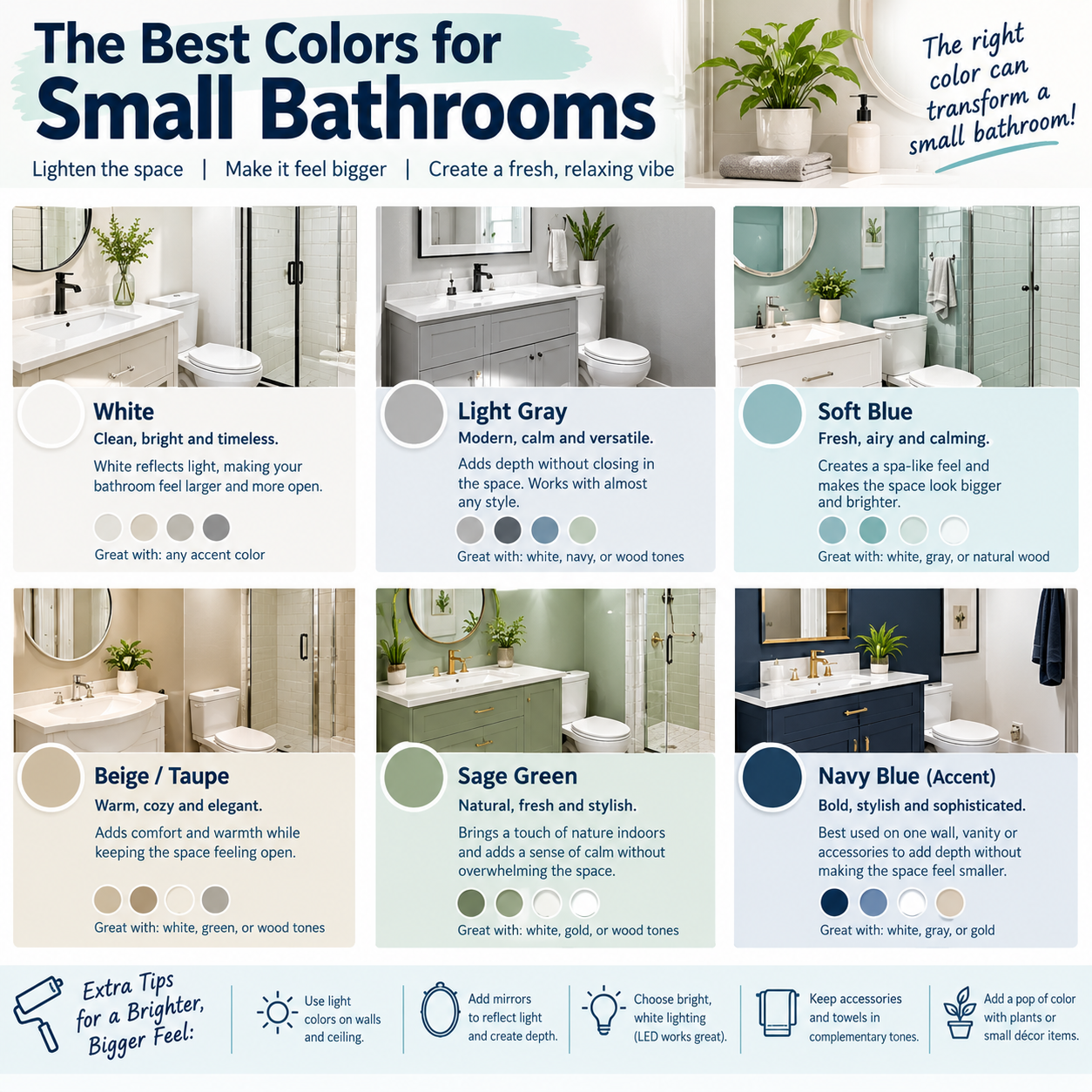
Many people automatically choose bright white because lighter colors can reflect more light and create an open feeling. While white is still a reliable option, it is not the only choice. Current bathroom design trends include warm neutrals, soft blues and greens, subtle pinks, earthy shades, and even deeper colors used in carefully planned ways.
The best color ultimately depends on your bathroom’s natural light, artificial lighting, existing fixtures, and the atmosphere you want to create.
Here are some of the best colors to consider for a small bathroom.
1. Warm White
Warm white is one of the safest choices for a small bathroom.
Unlike a very bright, cool white, warm white contains subtle beige or cream undertones. This can make the bathroom feel bright without making it look overly cold or clinical.
Warm white works especially well with:
- Natural wood
- Brass or gold fixtures
- Beige tiles
- Light-colored countertops
- Soft-colored towels
If your bathroom has limited natural light, a warm white can help create a welcoming atmosphere.
2. Off-White
Off-white is another excellent option when you want the brightness of white but prefer something softer.
It can make a compact bathroom feel open while adding a little more warmth and character than pure white. Designers continue to recommend off-white shades for small spaces because they provide brightness without looking too stark.
You can combine off-white walls with white fixtures and natural wood accessories for a simple, timeless appearance.
3. Light Gray
Light gray can create a clean and modern appearance.
Choose a soft gray rather than an extremely dark or heavily blue-toned gray if your main goal is to make the room feel brighter.
Light gray works particularly well with white fixtures, chrome hardware, black accents, and natural materials.
However, pay attention to the lighting in your bathroom. Some gray shades can appear colder under certain artificial lights, so testing a sample on the wall before painting the entire room is a smart idea.
4. Soft Blue
Soft blue is a popular bathroom color because it naturally creates a calm and relaxing atmosphere.
A pale blue can make the walls feel less visually heavy while adding more personality than plain white.
Pair it with white trim, white bathroom fixtures, light wood, or brushed metal finishes.
Soft blue is particularly effective when you want your bathroom to feel fresh and peaceful.
5. Blue-Gray
If pale blue feels too colorful, try a muted blue-gray.
This shade combines the calming qualities of blue with the neutrality of gray. Recent design guidance identifies gray-blue as a useful choice for small bathrooms because it can create a sense of openness while maintaining a sophisticated appearance.
It works especially well with white, light gray, and natural wood.
6. Pale Green
Pale green can bring a natural and refreshing feeling into a small bathroom.
Soft sage, mineral green, and other muted green shades are especially useful because they introduce color without becoming overwhelming.
Green can be paired with warm white, cream, wood tones, and natural stone for an organic look.
This can be a great choice if you want your bathroom to feel more connected to nature.
7. Sage Green
Sage green has become a popular choice for bathrooms because it offers color while remaining relatively calm and versatile.
Unlike a bright green, a muted sage can create a relaxed atmosphere without dominating the room.
You can use sage on the walls or introduce it through the vanity, towels, artwork, or accessories.
For a small bathroom, pairing sage with warm white can help maintain a light and balanced appearance.
8. Taupe
Taupe is a useful option if you want something warmer than gray but more neutral than brown.
It can make a bathroom feel comfortable and sophisticated without making the space feel visually busy.
Taupe works particularly well with cream, white, natural wood, stone, and bronze-colored hardware.
It is also a good choice if you want a neutral bathroom that does not look exactly like every other white bathroom.
9. Beige
Beige can work beautifully in a small bathroom when you choose the right shade.
Very dark beige can make a small room feel heavy, but a soft, warm beige can create a comfortable and inviting atmosphere.
Pair it with white fixtures and lighter flooring to keep the room feeling balanced.
Warm beige is particularly attractive when combined with natural wood and soft lighting.
10. Blush Pink
Blush pink can add warmth and personality without overwhelming a small room.
A muted blush or dusty pink can work almost like a neutral, especially when combined with white, cream, beige, or light wood.
It is a good choice if you want something more interesting than traditional neutrals.
Current small-bathroom color guides also highlight blush pink as a versatile option for compact spaces.
11. Pale Lavender
Lavender can give a small bathroom a soft, relaxing appearance.
A pale lavender shade can work particularly well with white fixtures and silver or brushed-metal hardware.
Avoid choosing an extremely saturated purple if your goal is to make the room feel calm and spacious. A softer shade is generally easier to combine with the rest of the bathroom.
12. Butter Yellow
A soft yellow can make a small bathroom feel cheerful and bright.
Instead of choosing an intense yellow, consider a pale butter or creamy yellow.
This works particularly well in bathrooms that do not receive much natural light because the warm tone can create a sunny atmosphere.
Combine it with white, cream, light wood, or subtle green accents.
13. Soft Greige
Greige is a combination of gray and beige.
It can be useful if you like the modern appearance of gray but want something warmer.
A soft greige can work with many different bathroom styles, including modern, traditional, minimalist, and transitional designs.
It is also easy to coordinate with white fixtures and natural materials.
14. Deep Blue
You do not necessarily have to avoid dark colors simply because your bathroom is small.
A deep blue can create a dramatic, cozy, and sophisticated atmosphere when used intentionally. Designers featured in 2026 coverage have suggested that deeper mid-tones such as inky blue can work particularly well in compact bathrooms because they create an enveloping rather than purely utilitarian feeling.
You can use deep blue on all the walls for a dramatic look or limit it to the vanity, cabinetry, or one feature area.
15. Earthy Terracotta
Terracotta can add warmth and character to a bathroom.
It works especially well with cream, beige, natural wood, and warm metal finishes.
Because terracotta has a strong visual presence, consider using a muted version or introducing it through smaller areas such as a vanity, accessories, or an accent wall.
When using any strong bathroom color, remember that the lighting and mirror can affect how the shade appears on skin. Some designers specifically caution that certain intense greens, yellows, and terracotta tones can create unflattering reflections under bathroom lighting.
16. Use One Color Throughout the Room
One useful technique for a small bathroom is to reduce the number of visual breaks.
Instead of using a different color on every wall, consider using one main color throughout the room.
You can then create contrast through the vanity, hardware, towels, artwork, and accessories.
Using similar tones across walls, trim, and larger surfaces can help the bathroom feel more connected.
17. Create Contrast With the Vanity
You do not have to paint the entire bathroom a bold color.
Another option is to keep the walls light and introduce stronger color through the vanity.
For example, you could combine warm white walls with:
- Sage green vanity
- Deep blue vanity
- Natural wood vanity
- Soft gray vanity
- Muted terracotta vanity
This creates a focal point without making the entire bathroom visually heavy.
18. Match Your Color to the Natural Light
Before choosing a paint color, pay attention to how much natural light enters the bathroom.
A color that looks beautiful in a brightly lit showroom may look completely different in a dark bathroom.
Look at paint samples during different times of the day and under your actual bathroom lighting.
This is especially important with gray, green, blue, and other colors that can change significantly depending on surrounding light.
19. Don’t Forget the Ceiling
The ceiling is part of the bathroom’s overall color scheme.
A white or soft off-white ceiling can help maintain a bright appearance.
However, if you want a more dramatic design, you can use a closely related shade on both the walls and ceiling to create a more continuous look.
The important thing is to consider the entire room rather than choosing wall color in isolation.
20. Add Color Through Accessories
If you are not ready to commit to a new wall color, introduce color through accessories.
This is one of the easiest and least expensive ways to experiment.
Try adding color through:
- Towels
- Bath mats
- Shower curtains
- Artwork
- Soap dispensers
- Storage baskets
- Plants
- Vanity accessories
For example, a white bathroom can be transformed with sage-green towels and natural wood accessories without repainting the walls.
How to Choose the Right Color for Your Small Bathroom
Before buying paint, consider three important things: lighting, existing finishes, and the atmosphere you want.
If your bathroom is dark, lighter colors may help reflect available light. If the room receives plenty of natural light, you have more flexibility and can experiment with deeper or more colorful shades.
Also look at your existing floor tiles, countertop, vanity, and fixtures. The paint should work with these elements rather than fighting against them.
Most importantly, buy or borrow a sample and test it on the actual wall. Look at it during the day and at night with the bathroom lights switched on.
Final Thoughts
There is no single perfect color for every small bathroom.
Warm white, off-white, light gray, soft blue, pale green, sage, taupe, beige, blush, and pale lavender can all create beautiful results. Deeper shades such as inky blue can also work when used deliberately.
The best approach is to choose a color that works with your bathroom’s natural and artificial lighting and complements the fixtures and materials already in the room.
A small bathroom does not have to be plain. With the right color palette, even a compact space can feel bright, comfortable, stylish, and full of personality.