Living Room Makeover Ideas: How to Transform Your Space Without a Full Renovation
When people search for living room makeover ideas, they usually aren’t picturing a construction crew. They’re picturing the room they already have, just better.
A little tired, maybe a little mismatched, and ready for a change that doesn’t require moving walls or pulling permits. That’s really the heart of a makeover: working with the bones you already have and rethinking how the pieces fit together.
I think the biggest mistake people make with a living room makeover is treating it as a shopping list instead of a plan.
They buy a new rug, then a new lamp, then a piece of art, and none of it talks to the others. My approach is usually to pick one or two anchor decisions first (a color direction, a focal point, or a furniture layout) and let everything else follow from there.
Makeover vs. Renovation: Where the Line Sits
It’s worth pausing on this distinction because it shapes what you should even attempt. A renovation typically involves structural or built-in changes: moving a wall, adding built-in shelving, replacing flooring, or rewiring for new lighting circuits.
A makeover works with what’s already in place. You’re repainting, rearranging, reupholstering, and restyling rather than rebuilding.
Costs for either can vary widely depending on the size of the room, the quality of materials chosen, and whether you’re doing the work yourself or hiring help, so neither category is automatically “cheap” or “expensive.”
A one-room paint refresh and new lighting can still run into real money if you choose premium materials, while a modest renovation limited to a single wall might be more affordable than expected.
Start With Layout, Not Decor
Before you touch a paint swatch, look at how the furniture is arranged. Traffic flow matters more than most people expect.
If guests have to squeeze between the coffee table and the sofa to reach a chair, that friction affects how the whole room feels, even if nobody can quite say why.
A few layout principles I keep coming back to:
- Give the room a clear focal point, whether that’s a fireplace, a television, or a piece of art, and orient the main seating toward it.
- Float furniture away from the walls when the room allows for it. A sofa pulled a few inches off the wall, with a console or plant behind it, often feels more intentional than one pushed flush against the baseboard.
- Leave at least 30 to 36 inches of walking space in main pathways so the room doesn’t feel obstructed.
If you’re working in a smaller footprint, [Internal Link: Small Living Room Ideas] covers scale and space-saving furniture in more depth.
Color and Paint Changes That Reset the Room
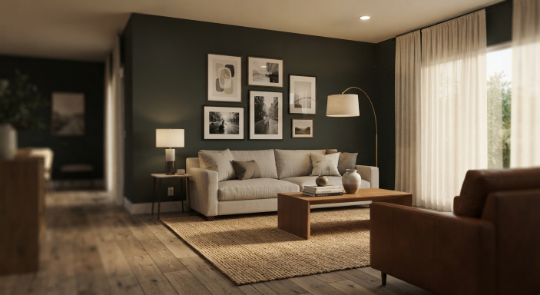
Paint is still one of the highest-impact, lowest-cost tools in a living room makeover. An accent wall behind the sofa or around a fireplace can redirect attention and give the room a sense of depth it didn’t have before.
If a full accent wall feels risky, painting the trim, ceiling, or even the inside of a bookshelf in a contrasting tone is a smaller way to test a bolder color.
Warmer, muted tones (terracotta, olive, warm gray) tend to read as cozy and lived-in, while cooler tones (soft blues, greens) tend to feel calmer and more contemporary. Neither is objectively better; it depends on the mood you’re going for and how the room is used.
Lighting as a Mood Tool, Not Just a Utility
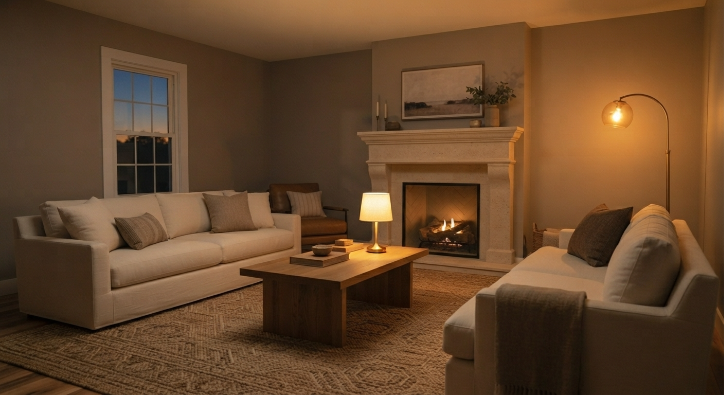
One detail I would not overlook is layered lighting. A single overhead fixture flattens a room and makes everything feel a bit like an office.
Combining ambient light (overhead or general), task light (a reading lamp near a chair), and accent light (a sconce or picture light on artwork) gives the room dimension at different times of day.
The U.S. Department of Energy’s guidance on energy-efficient indoor lighting design points out that matching the amount and quality of light to how a space is actually used, rather than defaulting to one bright source, makes rooms both more comfortable and more efficient to light.
Dimmer switches on existing fixtures are a relatively easy upgrade that changes the entire feel of a room in the evening without any structural work.
Rugs, Curtains, and Cushions: The Textures That Tie It Together
Textiles do a lot of quiet work in a makeover. A rug that’s too small is one of the most common living room mistakes I see; it visually shrinks the seating area instead of anchoring it.
As a general guideline, front furniture legs (or all four legs, if the room allows) should sit on the rug rather than floating just past its edge.
Curtains hung closer to the ceiling than to the top of the window frame, and wide enough to clear the glass when open, make windows look taller and let in more light during the day.
Cushions and throws are the easiest way to introduce a new color or pattern without committing to anything permanent, and they’re simple to rotate seasonally.
Wall Decor, Shelving, and the TV Area
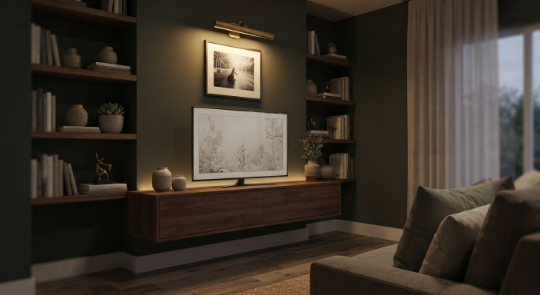
Gallery walls, oversized art, and open shelving all serve a similar purpose: giving the eye somewhere to land besides the television.
If the TV is the visual centerpiece of the room by default, consider mounting it and flanking it with shelving or art so it reads as one part of a composed wall rather than the only thing there.
If you’re mounting a television, shelving, or heavier wall decor, the Consumer Product Safety Commission’s Anchor It! campaign has practical guidance on securing TVs and furniture to the wall, which matters in households with young children or pets who might bump into freestanding pieces.
A Hypothetical Scenario: The “Beige Box” Living Room
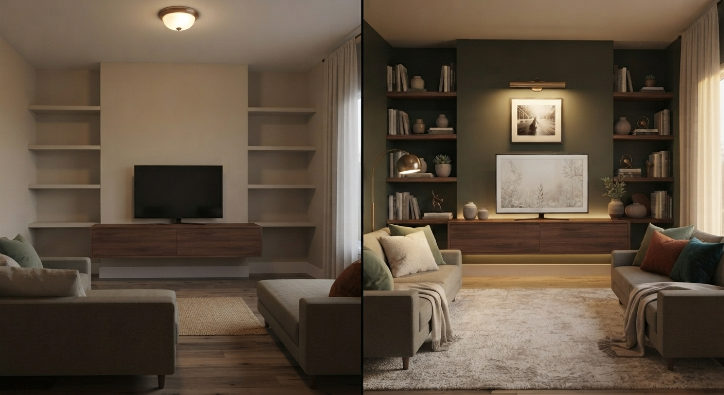
To make this concrete, imagine a fairly typical living room: builder-grade beige walls, a sofa facing a TV mounted too high, one overhead light, and a rug that’s noticeably smaller than the seating area. This is a hypothetical scenario, not a real project, but it reflects a layout I see described often.
A makeover here might involve: painting the wall behind the sofa in a warm charcoal or deep green, lowering the TV to eye level while seated, swapping in a rug large enough for the front legs of every seating piece to rest on it, adding a floor lamp and a table lamp to break up the single overhead light source, and layering in two or three cushions in a complementary but not matching pattern.
None of these changes require a contractor, yet together they change the room’s entire character.
Bringing Different Styles Into a Cohesive Makeover
Living room makeover ideas don’t have to follow one aesthetic. A few directions worth considering:
- Warm and natural: Wood tones, woven textures, and earthy colors for a grounded, calm feel.
- Modern minimalist: Fewer, larger pieces, a neutral palette, and negative space treated as a design choice rather than an oversight.
- Traditional: Layered patterns, richer wood furniture, and symmetry in the layout.
- Family friendly: Durable, cleanable fabrics, rounded furniture edges, and storage built into ottomans or media consoles.
Whichever direction you choose, consistency across two or three elements (a color palette, a material like wood or brass, or a general shape language) is what makes a room read as “done” rather than assembled piece by piece.
Frequently Asked Questions
How much does a living room makeover typically cost?
It depends heavily on scope. A paint and textile refresh can be modest, while new furniture and lighting fixtures raise the cost. Location, material quality, and whether you do the work yourself all factor in.
What’s the difference between a living room makeover and a renovation?
A makeover works with the existing structure through paint, furniture, and decor changes, while a renovation involves more substantial work like moving walls, changing flooring, or rewiring.
Do I need to repaint the whole room, or just one wall?
Neither is required. An accent wall behind the main seating or fireplace is a common way to add color impact without repainting the entire room.
How do I choose a focal point if my living room doesn’t have one?
Common options include a fireplace, a large window, a media wall, or a piece of art. Arrange seating to face or partially face this point.
Is it better to buy new furniture or rearrange what I have?
Rearranging is worth trying first since it’s free. If the pieces are the wrong scale for the room or badly worn, replacing key pieces like the sofa can have more impact than smaller decor changes.
How do I make a living room makeover feel cohesive instead of random?
Anchor decisions early: pick a color direction, a focal point, and one or two materials or textures to repeat throughout the room before buying individual pieces.
Can a living room makeover improve how functional the room feels, not just how it looks?
Yes. Improving traffic flow, adding proper task lighting, and organizing storage all affect daily function, not just appearance, and are worth planning alongside purely decorative changes.
Bringing It All Together
A good living room makeover isn’t really about any single purchase. It’s about a handful of decisions, layout, color, lighting, and texture, working in the same direction instead of competing with each other.
Start with the changes that cost nothing (rearranging furniture, decluttering surfaces) before deciding where to spend money.
In my research and in practice, the rooms that feel most transformed are usually the ones where every choice supports the same mood, not the ones with the most new items in them.
If your living room is on the smaller side and space itself is the main challenge, [Internal Link: Small Living Room Ideas] picks up where this article leaves off.