Small Kitchen Makeover Ideas: A Fresh Look Without a Full Renovation
If you’re searching for small kitchen makeover ideas, chances are you’re not looking to gut the room. You want it to look and feel noticeably better without the timeline, cost, and disruption of a full renovation.
That’s a reasonable goal, and a compact kitchen is often a good candidate for exactly this kind of refresh, because there’s simply less surface area to update.
My approach with a makeover is to prioritize changes that touch what you see and use every day: cabinet faces, hardware, paint, lighting, and organization, rather than anything involving plumbing, electrical rerouting, or layout changes.
What Counts as a Makeover in a Small Kitchen
A makeover generally means working with the existing cabinet boxes, countertops, and layout, and changing the surface level details.
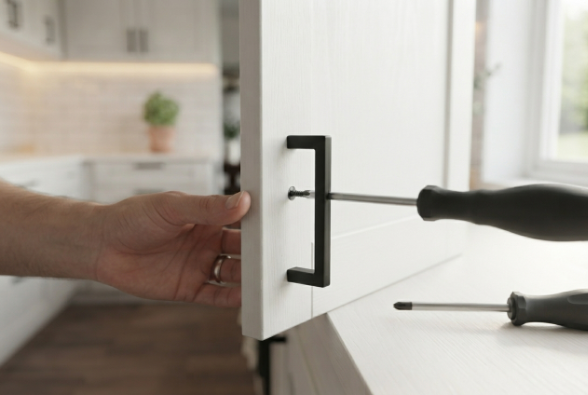
That includes painting or refinishing cabinet doors rather than replacing them, swapping hardware, updating the backsplash, changing lighting fixtures, and reorganizing storage.
It does not typically include moving plumbing, relocating appliances, or reconfiguring the room’s footprint. Also read Budget Home Makeover Ideas That Don’t Look or Feel Cheap.
If you find yourself wanting to move the sink, add an island, or reroute electrical for new can lighting, you’ve likely crossed into renovation territory, which covers in more depth.
Cabinet Updates Without Full Replacement
Cabinets are usually the single biggest visual element in a small kitchen, which makes them the highest-impact place to start. Repainting existing cabinet doors, rather than replacing the boxes, is one of the more dramatic changes you can make relative to the effort involved.
A shift from dated oak or dark wood tones to a soft white, warm cream, or muted sage can make a compact kitchen feel considerably brighter.
If a full repaint feels like too much, consider painting just the lower cabinets and leaving the uppers in a lighter existing tone, or vice versa. Two-tone cabinetry, done deliberately, reads as an intentional design choice rather than a compromise.
Hardware Is a Small Detail With an Outsized Effect
I would not overlook cabinet hardware in a small kitchen makeover. Swapping dated brass or plastic knobs for updated pulls in a consistent finish, whether that’s matte black, brushed nickel, or unlacquered brass, changes the entire feel of the cabinetry without touching the doors themselves.
This is also one of the more affordable line items on a makeover list, though exact costs vary depending on the number of cabinets and the hardware chosen.
Backsplash Refreshes That Don’t Require Demolition
A full tile backsplash installation can edge into renovation-level work, but there are lighter options that stay within makeover territory.
Peel and stick tile, if installed correctly over a clean, flat surface, can update the look of a backsplash without the labor of traditional tile setting.
In some kitchens, extending an existing painted wall as the backsplash, paired with a clear protective sealant, is another lower-effort option.
If your current backsplash is in reasonable condition but simply dated, regrouting tile can also refresh its appearance without removing it.
Lighting as an Easy, High-Impact Refresh
Lighting is one of the fastest ways to change how a small kitchen feels day to day. Swapping a dated flush mount ceiling fixture for a more current pendant or updated flush mount is generally straightforward and doesn’t require rewiring in most cases, since it typically uses the existing electrical box.
Under-cabinet lighting, often battery powered or plug-in for a true makeover approach, adds task lighting over the counter without any electrical work at all.
The Department of Energy’s guidance on energy-efficient lighting choices is a useful reference point when comparing bulb types and color temperatures, since warmer toned LED bulbs tend to suit kitchens that lean traditional, while cooler toned bulbs often suit more modern spaces.
Open Shelving Where It Actually Makes Sense
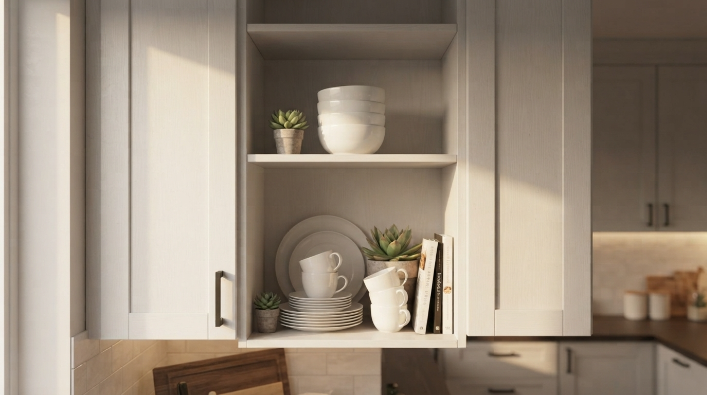
Open shelving isn’t right for every kitchen, but in a small space it can serve two purposes at once: adding visual openness and reducing the bulk of upper cabinets.
It works best where there’s already a logical spot, like a single run of wall where upper cabinets could come down, and where you’re comfortable keeping the shelved items reasonably tidy, since open storage is more visible than closed cabinets.
If you’re not ready to commit to removing cabinet doors permanently, consider it as a smaller test on just one section of wall before deciding to remove more.
Countertop Styling and Small Functional Improvements
If a full countertop replacement isn’t in the makeover budget, there’s still room to improve how the counters look and function.
Clearing counters down to only the appliances used daily makes a compact kitchen feel considerably larger. A butcher block cutting board or a tray used to corral oils and utensils near the stove keeps frequently used items accessible without looking cluttered.
For a modest functional upgrade that still fits within makeover scope, replacing a worn or dated faucet is often manageable without professional plumbing help, since many kitchen faucets connect to standard supply lines. If your existing faucet and sink basin are in good condition, this step can be skipped entirely.
Kitchen planning is a well established discipline, and the National Kitchen and Bath Association’s planning guidelines are a useful reference even for a light makeover, particularly around countertop clearance and storage frontage, if you want to sanity check that your reorganized layout still leaves enough workable counter space.
Organization and Storage Accessories
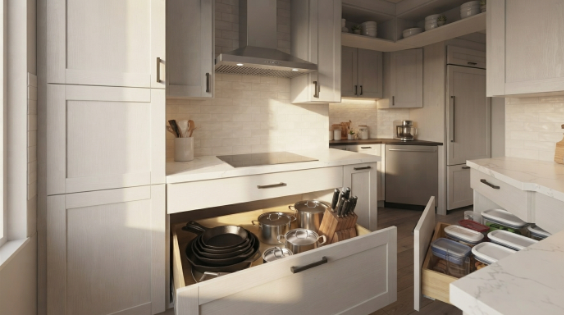
A small kitchen makeover isn’t just visual. Interior organizers, pull-out bins, drawer dividers, and stackable shelves inside existing cabinets can meaningfully improve how the space functions without touching the cabinet boxes themselves.
This is often the most overlooked part of a makeover, since it’s invisible in “after” photos but makes the biggest difference in daily use.
Wall Color, Window Treatments, and Textiles
Paint on the surrounding walls, not just the cabinets, plays a role too. A fresh coat in a light, warm neutral can brighten a kitchen that gets limited natural light.
Simple café curtains or a roller shade over the kitchen window adds softness without interfering with a sink or counter beneath it.
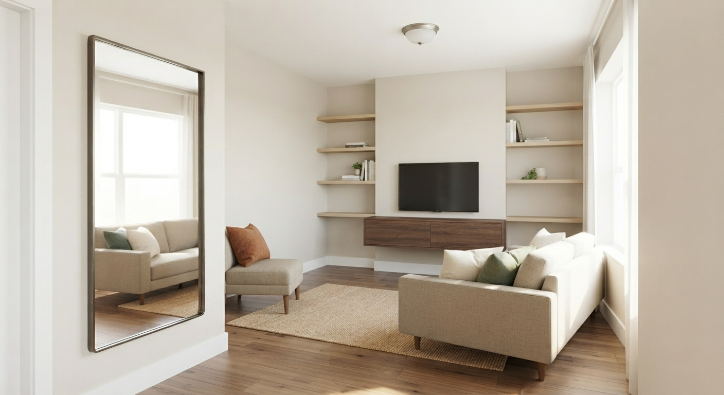
Swapping out a dated dish towel, oven mitt, and rug for a coordinated set is a small textile change that ties the room together visually, similar to how cushions function in a living room refresh.
A Practical Homeowner Scenario: The 1990s Galley Kitchen
Here’s a hypothetical example to make this concrete. Picture a narrow galley kitchen with oak cabinets, brass hardware, a dated laminate countertop in reasonable condition, and a single overhead light. This is a hypothetical scenario for illustration, not a documented real project.
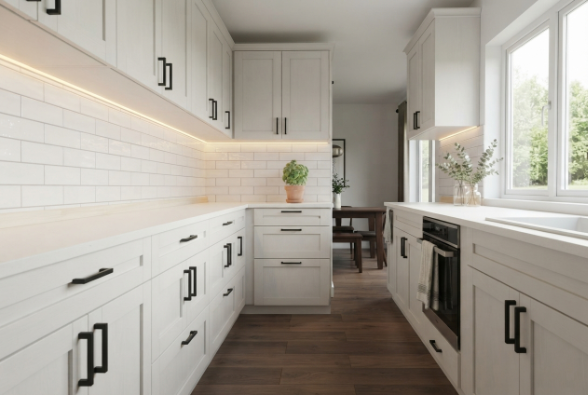
A makeover approach might involve painting the cabinets a soft white, replacing the hardware with matte black pulls, adding a peel and stick tile backsplash in a simple pattern, swapping the overhead fixture for an updated flush mount, and adding battery powered under-cabinet lights.
The laminate countertop and existing layout stay untouched. Depending on the kitchen’s condition and the exact products chosen, a project like this can meaningfully change the room’s appearance while staying well within makeover scope rather than renovation scope.
When a Makeover Isn’t Enough
It’s worth being honest about the limits of a makeover. If the cabinet boxes themselves are damaged, if the layout genuinely doesn’t work for how you cook, if plumbing or electrical systems are outdated, or if you need more counter or storage space than a reorganization can create, a renovation becomes the more appropriate path.
There’s no shame in starting with a makeover and revisiting a renovation later once budget and priorities allow.
Frequently Asked Questions
What’s included in a small kitchen makeover versus a renovation?
A makeover typically includes paint, hardware, lighting, backsplash refreshes, and organization, while a renovation involves layout changes, new cabinetry, plumbing, or electrical work.
Can I really change how my kitchen looks without replacing cabinets? Yes, in many cases repainting existing cabinet doors and updating hardware creates a significant visual change without full replacement.
Is peel and stick backsplash tile a good long-term option?
It can work well for a makeover budget and timeline, though durability varies by product and installation surface, so check the manufacturer’s guidance for your specific kitchen conditions.
How much does a small kitchen makeover typically cost compared to a renovation?
Costs vary widely based on materials and labor, but a makeover generally involves a smaller scope of work than a renovation, which can make it a lower cost option, though premium finishes can still add up.
Do I need a professional for a small kitchen makeover?
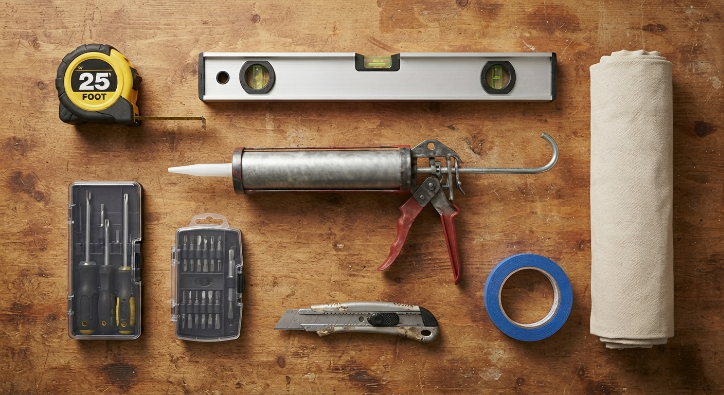
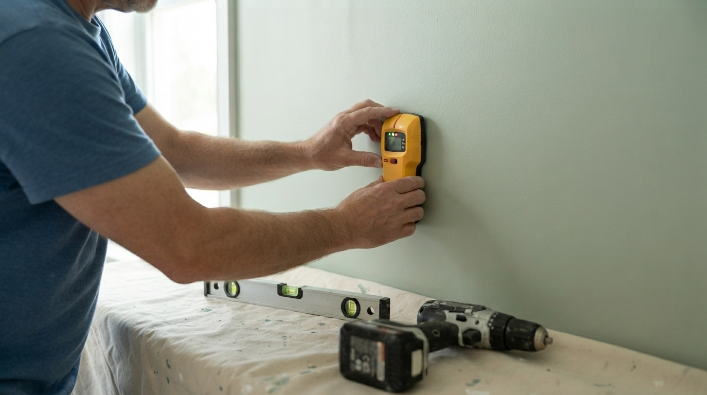
Many makeover tasks, like painting, hardware swaps, and light fixture changes that reuse existing wiring, are commonly done as DIY projects, though electrical or plumbing work should be evaluated for whether professional help is appropriate.
Will open shelving work in my small kitchen?
It depends on your layout and how tidy you’re comfortable keeping visible storage. It tends to work best on a single wall section rather than replacing all upper cabinets.
How do I know if I need a small kitchen makeover or a full renovation?
If the layout and cabinet boxes are functional and you mainly want a visual refresh, a makeover is likely sufficient. If storage, workflow, or the layout itself is the problem, a renovation is probably necessary.
Final Thoughts on Refreshing a Small Kitchen
A small kitchen makeover works because it focuses effort where it’s most visible: cabinet faces, hardware, lighting, and organization.
None of these changes require reconfiguring the room, and most can be done in stages as time and budget allow. The goal isn’t to make the kitchen unrecognizable, it’s to make it feel current, brighter, and better organized using the layout you already have.
If, after a makeover, the space still doesn’t function the way you need it to, that’s a sign the next step is a more substantial renovation rather than another round of cosmetic changes