Bathroom Renovation Ideas on a Budget: Smart Ways to Upgrade Without Overspending
A bathroom renovation can become expensive surprisingly quickly. A new vanity leads to new plumbing, new flooring makes you consider new tiles, and suddenly a simple update has turned into a major construction project.
The good news is that bathroom renovation ideas on a budget do not have to mean settling for a bathroom that looks unfinished or choosing the cheapest product available.
The smarter approach is to decide where your money will make the biggest difference. Keep what is still useful, improve what is outdated, and spend more on areas where quality and safety matter. In my research, this approach consistently makes more sense than trying to replace everything at once.
It is also useful to understand the difference between a makeover, improvement, and renovation. A makeover mainly changes appearance.
An improvement targets specific problems or features. A renovation is more substantial and can involve replacing fixtures, surfaces, plumbing, electrical work, or changing the layout.
How to Plan a Bathroom Renovation on a Budget
Before buying tiles or choosing a new vanity, inspect the bathroom you already have.
Look closely at the plumbing, flooring, walls, cabinets, fixtures, ventilation, lighting, and overall layout. Make a simple list of what needs to be repaired, what could be improved, and what can stay.
This prevents a common renovation mistake: spending money on attractive finishes while ignoring problems underneath.
Set your budget before shopping and divide it into categories such as materials, fixtures, labor, delivery, and unexpected repairs. Keep some money aside as a contingency because opening walls or removing old flooring can reveal problems you could not see beforehand.
Most importantly, do not assume that a complete layout change is necessary. Moving a toilet, shower, or sink can require additional plumbing work, which can quickly increase the project scope.
Also read small bathroom improvement ideas
Bathroom Renovation Ideas on a Budget That Make a Difference
Keep the Existing Layout
One of the simplest ways to control renovation costs is to work with the existing bathroom layout.
If your shower, toilet, vanity, and plumbing are already positioned sensibly, there may be little reason to move them. You can still create a noticeably different bathroom through new surfaces, fixtures, lighting, storage, and hardware.
A layout change can make sense when the current bathroom is genuinely difficult to use, but it should be a deliberate decision rather than something done simply because a renovation has started.
Refinish Before Replacing
Not every old bathroom element needs to go into the skip.
A structurally sound vanity may only need new paint and hardware. An existing bathtub may be worth refinishing instead of replacing. A good mirror can sometimes look completely different with a new frame or better lighting around it.
A real example comes from a Better Homes & Gardens renovation of a century old house in Des Moines. Stylist Leslie Poyzer kept the existing pink cast iron bathtub because it was in good condition and used it as the starting point for the room’s design. The layout was also kept unchanged, helping control costs.
The lesson is simple: sometimes the best budget decision is knowing what not to replace.
Choose Affordable Flooring Carefully
Bathroom flooring needs to handle moisture, frequent cleaning, and everyday traffic. That means price should not be the only consideration.
Look for durable options that suit your bathroom and installation conditions. Depending on the existing floor and local availability, ceramic or porcelain tile and other moisture suitable flooring products may be worth considering.
If the existing flooring is damaged, loose, or allowing moisture to reach the subfloor, appearance should not be the priority. Fix the underlying problem first.
Refresh the Vanity
The vanity often occupies a significant visual area, so changing it can make the bathroom feel substantially newer.
However, replacing the whole vanity is not always necessary. If the cabinet is structurally sound, consider repainting it, replacing handles, changing the countertop if needed, or upgrading the sink and faucet.
A simple vanity with attractive hardware and good lighting can look more intentional than an expensive vanity squeezed into a poorly planned bathroom.
Upgrade the Faucet and Showerhead
Small fixture changes can provide both visual and practical benefits.
When selecting a bathroom faucet, look for quality construction and appropriate water efficiency rather than simply choosing the cheapest model. The U.S. Environmental Protection Agency’s WaterSense program notes that WaterSense labeled bathroom faucets use a maximum of 1.5 gallons per minute and can reduce flow by at least 30 percent compared with the standard 2.2 gallons per minute.
A showerhead can also be an affordable functional upgrade. WaterSense labeled showerheads use no more than 2.0 gallons per minute while meeting performance criteria.
These choices show why budget renovation does not always mean buying the lowest priced product. A product that performs well and uses resources efficiently may provide better long term value.
Improve Bathroom Lighting
Poor lighting can make an otherwise attractive bathroom feel dull.
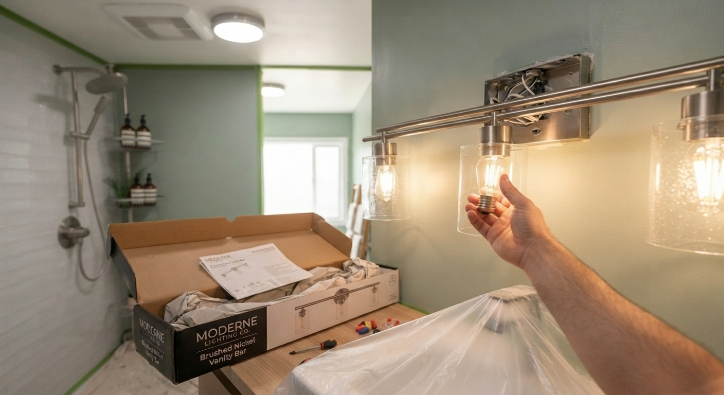
You do not necessarily need complicated lighting. Start by making sure the main areas are adequately illuminated. Consider better overhead lighting, task lighting around the vanity, and suitable accent lighting if the budget allows.
Use fixtures designed for the bathroom environment and have electrical work handled by an appropriately qualified professional when necessary.
Add Storage Without Major Construction
Storage is particularly valuable in a small bathroom.
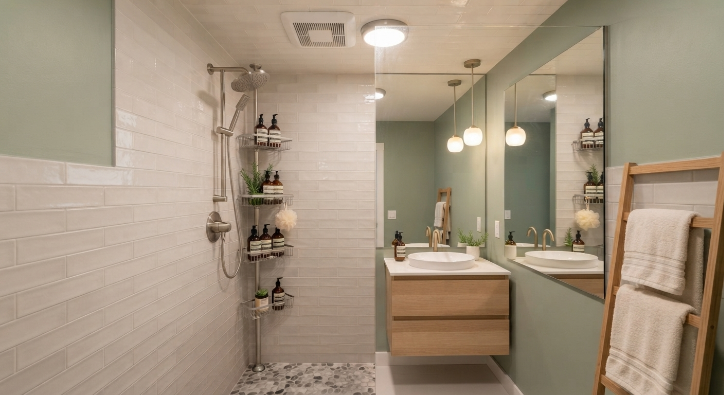
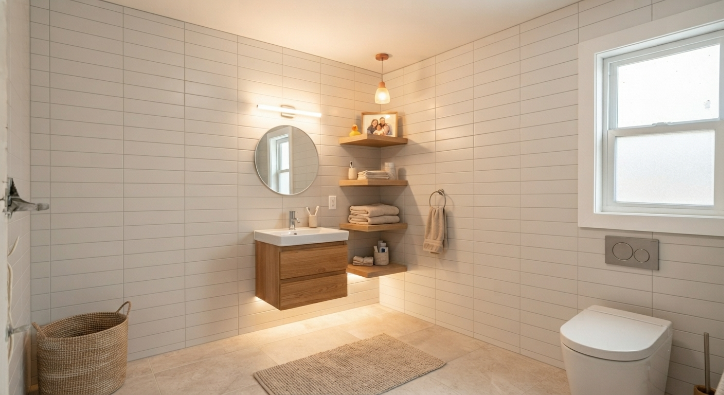
Instead of building expensive custom cabinetry, look at practical alternatives such as floating shelves, slim cabinets, baskets, over toilet storage, or a mirrored medicine cabinet.
The key is to use vertical space. A narrow wall that currently does nothing may be able to hold everyday toiletries without reducing valuable floor space.
Where to Save Money During a Bathroom Renovation
There are several areas where careful decisions can reduce unnecessary spending.
First, compare material prices before purchasing. Do not choose everything from one showroom simply because it is convenient. Similar looking products can have very different prices.
Second, plan purchases together. Buying materials in a rush often leads to compromises, extra delivery charges, or products that do not work well together.
Third, reuse sound elements. Cabinets, mirrors, tubs, and even some hardware may be worth keeping.
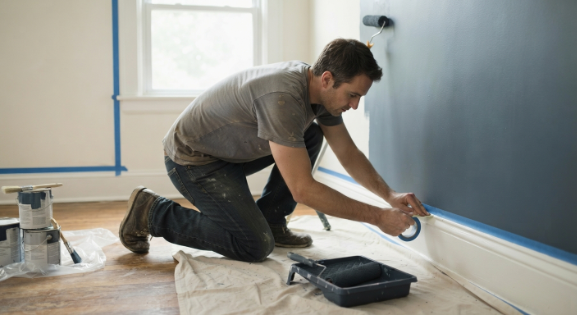
Fourth, consider doing suitable cosmetic tasks yourself if you have the skills and time. Painting, assembling certain furniture pieces, removing old accessories, and installing simple nontechnical items may reduce labor costs.
However, do not turn a budget renovation into a DIY experiment involving plumbing, structural changes, waterproofing, or electrical systems unless you have the appropriate knowledge and authorization.
Where You Should Not Cut Costs
Some bathroom expenses are not good places to bargain hunt.
Water leaks, damaged subfloors, poor waterproofing, unsafe electrical work, inadequate ventilation, and faulty plumbing can create problems that are much more expensive later.
Ventilation deserves particular attention. Moisture is a normal part of bathroom use, but poor moisture control can contribute to mold and deterioration. Better Homes & Gardens also recommends prioritizing bathroom ventilation and storage when planning a remodel.
Water efficiency is another area where a thoughtful upgrade can be worthwhile. EPA’s WaterSense program identifies certified efficient products that meet performance requirements while using less water.
Spend where the renovation protects the bathroom, then save where the change is mainly cosmetic.
DIY Tasks That Can Reduce Labor Costs
Some projects are suitable for confident DIY homeowners.
Painting, changing cabinet hardware, assembling storage furniture, replacing certain decorative accessories, and installing a mirror can sometimes be handled without professional labor.
But know the boundary.
Plumbing connections, electrical modifications, waterproofing, structural changes, and work that must comply with local building regulations should be approached carefully and, where required, completed by qualified professionals.
Saving money is useful. Paying to repair an avoidable mistake is not.
A Hypothetical Budget Renovation Example
Imagine a small bathroom with a sound layout, an outdated vanity, worn hardware, adequate flooring, and poor lighting.
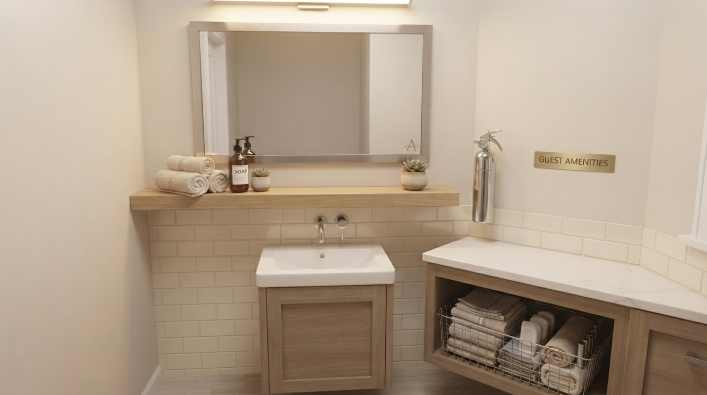
Instead of demolishing the entire room, the homeowner keeps the plumbing arrangement and flooring. The vanity is refinished, new hardware is installed, the mirror is replaced, lighting is improved, and a water efficient faucet is added. A few open shelves provide additional storage.
The result would not involve a complete reconstruction, but it could still feel like a meaningful renovation because the most visible and functional problems were addressed.
This is the principle I would follow when planning a limited budget: change the things you notice every day and repair the things that could become expensive problems later.
Common Budget Bathroom Renovation Mistakes
The first mistake is starting demolition before creating a plan.
The second is buying materials based only on appearance. Bathroom products need to suit moisture, cleaning, durability, installation requirements, and the existing space.
Another mistake is changing the layout without understanding the additional work involved.
It is also easy to underestimate small expenses. Handles, sealants, trim, delivery, lighting components, installation materials, and disposal costs can add up.
Finally, avoid trying to make every feature a statement piece. A bathroom usually benefits more from consistency than from filling the room with expensive finishes.
Final Thoughts
A successful bathroom renovation does not have to begin with a demolition crew and a long shopping list. The most effective bathroom renovation ideas on a budget usually come from careful prioritization.
Keep the layout when it makes sense. Reuse quality elements. Improve lighting and storage. Upgrade fixtures thoughtfully. Choose materials based on durability rather than price alone. Most importantly, do not sacrifice safety or essential construction quality simply to make the initial budget look smaller.
If I were planning a budget renovation, I would start by walking through the bathroom with a notebook and identifying three things: what is genuinely broken, what causes daily frustration, and what would make the biggest visual difference. That simple exercise can turn an overwhelming renovation into a manageable project.
The goal is not to spend as little as possible. It is to spend intentionally, so every part of the renovation earns its place in the budget.
Frequently Asked Questions
What are the best bathroom renovation ideas on a budget?
Start with the highest impact changes. Updating the vanity, lighting, fixtures, hardware, storage, and selected surfaces can make a substantial difference without requiring a complete reconstruction.
Is it cheaper to renovate a bathroom without changing the layout?
Often, keeping the existing layout can reduce the amount of plumbing and construction work involved. However, the actual savings depend on the bathroom’s condition, local labor costs, materials, and project scope.
What should I spend more money on during a bathroom renovation?
Prioritize safety, waterproofing, plumbing, electrical work, ventilation, and durable materials. Cosmetic items are generally easier places to reduce spending.
Can I renovate a bathroom myself?
Some tasks can be suitable for DIY work, including painting, hardware replacement, simple furniture assembly, and certain decorative updates. Plumbing, electrical, structural, and waterproofing work may require professional expertise.
How can I make a small bathroom look better without spending much?
Improve lighting, reduce clutter, use vertical storage, update hardware, refresh the vanity, and choose a consistent finish scheme. These changes can improve both appearance and usability.
Are water efficient bathroom fixtures worth considering?
Yes. WaterSense labeled fixtures are designed to meet efficiency and performance criteria. For example, WaterSense labeled toilets use 1.28 gallons per flush or less while meeting performance requirements.
Should I replace an old bathtub during a budget renovation?
Not necessarily. If the bathtub is structurally sound and suitable for the space, refinishing or keeping it may be more economical than replacing it. The documented renovation example involving Leslie Poyzer’s vintage bathtub demonstrates how an existing feature can become part of the design rather than a problem to remove.
How do I avoid unexpected bathroom renovation costs?
Inspect the bathroom before work begins, create a detailed project scope, compare material and labor options, avoid unnecessary layout changes, and keep a contingency amount for issues discovered during renovation.