How to Plan a Bathroom Renovation Step by Step
Planning a bathroom renovation can feel overwhelming, especially when you are trying to decide what to change, how much to spend, and where to begin. However, a good plan can make the entire process easier and help you avoid unnecessary expenses.
Whether you are making a few simple improvements or completely updating your bathroom, taking things one step at a time can help you stay organized. Before buying materials or removing anything, think carefully about what you want to achieve.
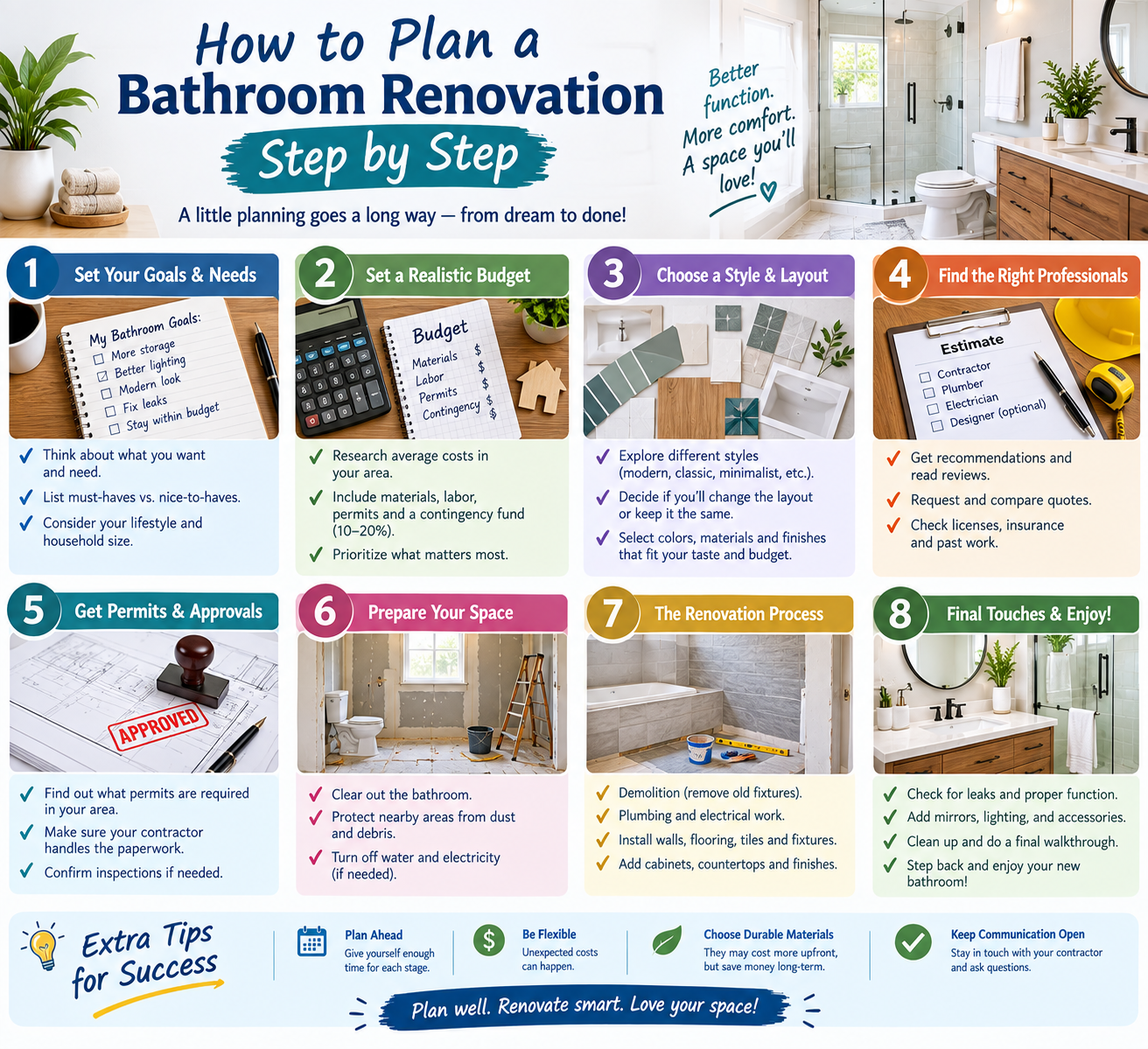
Here is a simple step-by-step guide to planning a bathroom renovation.
1. Decide What You Want to Change
Start by looking at your existing bathroom and identifying what you like and what you want to improve.
Do you need more storage? Is the lighting poor? Are the tiles damaged? Does the bathroom simply look outdated? Writing down your goals can help you focus on the changes that matter most.
You may discover that some features only need a simple refresh rather than complete replacement.
2. Set a Realistic Budget
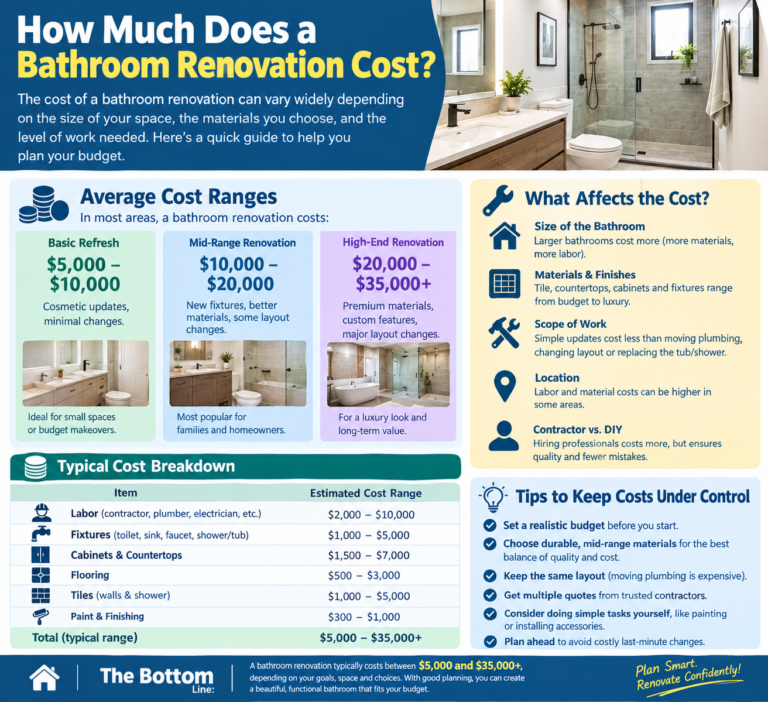
Once you know what you want to change, establish a renovation budget. Think about materials, fixtures, labor, delivery, waste removal, and other potential expenses.
Try to avoid spending your entire budget on decorative items. Keep some money available for unexpected problems that may appear once work begins.
A clear budget will also help you decide which improvements should be completed now and which can wait.
3. Measure the Bathroom
Accurate measurements are essential before purchasing fixtures or materials. Measure the length and width of the room, as well as the locations of doors, windows, plumbing connections, and existing fixtures.
If you are replacing a vanity, toilet, bathtub, or shower, record the available dimensions carefully. A product that looks perfect in a store may not fit your bathroom properly.
4. Decide Whether to Keep the Existing Layout
Changing the position of major plumbing fixtures can significantly increase the cost and complexity of a renovation.
If your current toilet, sink, shower, and bathtub are positioned effectively, consider keeping the existing layout. You can still create a fresh appearance by updating the surfaces, fixtures, lighting, storage, and accessories.
If you do want to change the layout, plan the plumbing requirements before purchasing fixtures.
5. Choose Your Bathroom Style
Think about the overall appearance you want. You might prefer a modern, minimalist, traditional, natural, or simple contemporary style.
Choose a basic color palette and consider how your tiles, walls, vanity, fixtures, lighting, and accessories will work together.
You do not need to copy a particular trend. A style that matches your personal preferences and the rest of your home may be easier to live with over time.
6. Select Materials and Fixtures
Now you can begin choosing the major materials and fixtures. These may include flooring, wall tiles, paint, vanity, sink, toilet, shower, bathtub, faucets, lighting, and storage.
When comparing products, look beyond appearance. Consider durability, maintenance, dimensions, installation requirements, and suitability for a bathroom environment.
Keep your budget in mind so that one expensive item does not consume money needed for other essential parts of the renovation.
7. Plan Storage
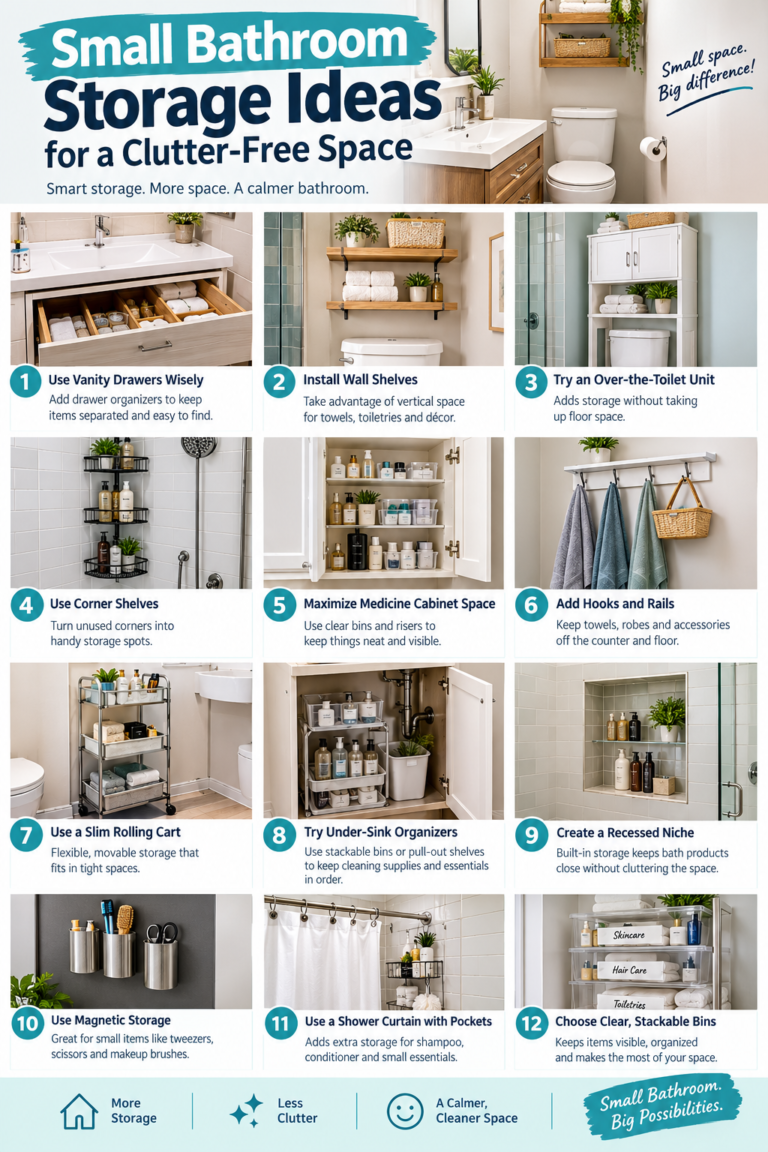
Storage should be considered before construction begins. Think about where you will keep towels, toiletries, cleaning supplies, and other bathroom essentials.
A vanity with drawers, wall-mounted shelves, cabinets, baskets, or recessed storage can help reduce clutter.
Good storage can make even a small bathroom feel more organized and comfortable.
8. Think About Lighting and Ventilation
Lighting and ventilation are easy to overlook, but both are important.
Plan adequate lighting for general use and consider additional lighting around the mirror and vanity. Make sure any electrical work is completed safely and according to applicable requirements.
Ventilation is also important because bathrooms produce moisture. Depending on your bathroom, adequate ventilation may involve a suitable window, exhaust fan, or another appropriate solution.
9. Plan Waterproofing and Moisture Protection
Areas exposed to regular water require appropriate preparation and waterproofing. This is particularly important around showers, bathtubs, and other wet areas.
Do not treat waterproofing as an optional decorative detail. Poor moisture protection can lead to damage that is much more expensive to repair later.
Use suitable materials and follow the manufacturer’s installation instructions.
10. Create a Renovation Timeline
Once you know what needs to be done, organize the work into stages. A typical renovation may involve removing old materials, preparing surfaces, completing plumbing or electrical work, installing waterproofing, fitting flooring and wall finishes, installing fixtures, and completing final details.
The exact order will depend on the project, but having a basic timeline can help prevent confusion.
If you are hiring contractors, discuss the expected schedule before work begins.
11. Buy Materials Carefully
Avoid buying everything without first confirming measurements, product availability, and installation requirements.
For important materials, keep product information, receipts, warranties, and installation instructions in a safe place. It is also useful to purchase enough material to account for cuts, breakage, or future repairs where appropriate.
12. Prepare the Bathroom
Before renovation work starts, remove personal belongings and anything that could be damaged.
If you are living in the home during the renovation, prepare for the possibility that the bathroom may be unavailable for some time. Protect nearby floors and furniture from dust and debris where necessary.
Proper preparation can make the renovation safer and less disruptive.
13. Complete Specialized Work Properly
Some renovation tasks may require specialist skills, particularly plumbing, electrical work, waterproofing, or structural changes.
If you are not experienced with these tasks, consider using appropriately qualified professionals. Poor workmanship in these areas can lead to leaks, electrical hazards, or expensive repairs.
14. Install the Fixtures and Finishing Touches
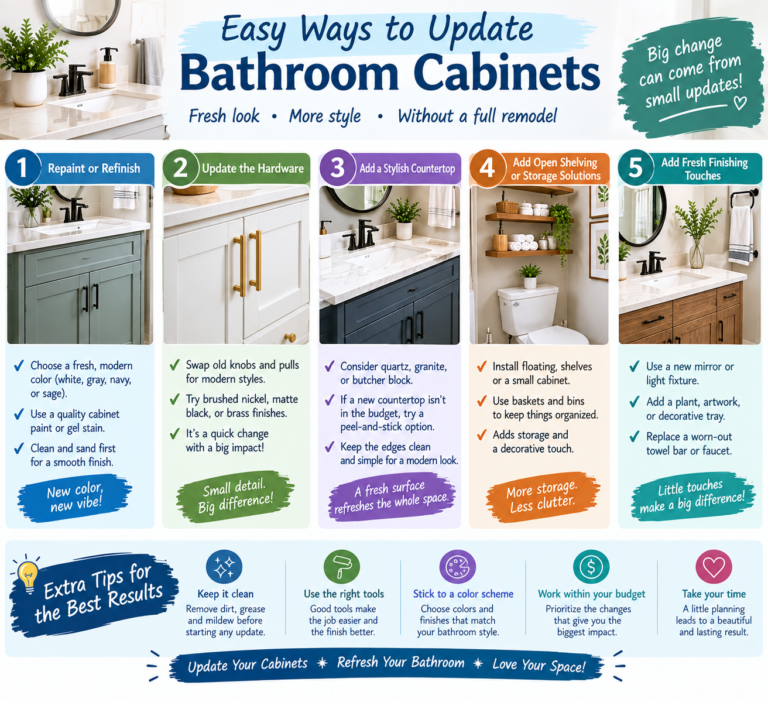
Once the major construction and surface work is complete, install the vanity, toilet, sink, shower fixtures, lighting, mirrors, storage, and accessories.
Take your time during this stage. Small details such as cabinet handles, towel hooks, mirrors, and lighting placement can have a significant effect on the finished appearance.
15. Inspect Everything Before Finishing
Before considering the renovation complete, walk through the bathroom carefully.
Check for leaks, damaged surfaces, loose fixtures, poor seals, drainage problems, and other issues. Open and close doors and drawers, test faucets and showers, and make sure water drains properly.
It is much easier to correct problems immediately than after the renovation has been completed for several weeks.
Final Thoughts
A successful bathroom renovation starts with good planning. Before beginning work, define your goals, set a realistic budget, measure the space, choose your style, and decide which improvements are most important.
Keeping the existing layout can often help control costs, while careful choices about materials, storage, lighting, ventilation, and waterproofing can improve both appearance and functionality.
Most importantly, do not rush the process. A bathroom renovation involves many small decisions, and taking time to plan each stage can help you avoid expensive mistakes. With a clear plan and realistic expectations, you can create a bathroom that is comfortable, practical, and attractive for years to come.