Best Bathroom Flooring Options for Every Budget
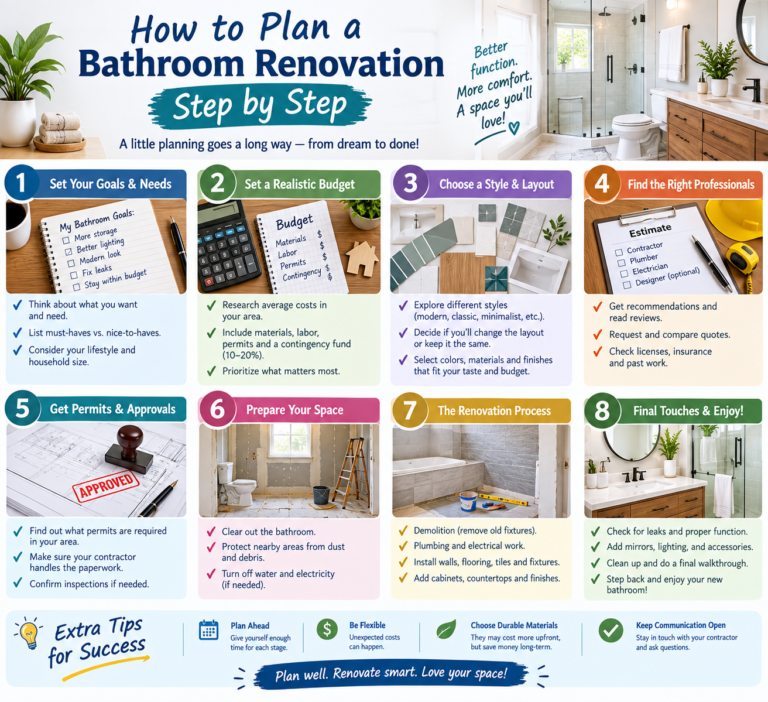
Choosing the right bathroom flooring is an important part of any renovation. The floor needs to look good, feel comfortable underfoot, handle regular exposure to moisture, and stand up to everyday use. At the same time, you may not want to spend more money than necessary.
Fortunately, there are bathroom flooring options for almost every budget. From affordable vinyl to durable porcelain and stylish natural stone, the best choice depends on your needs, preferences, and how much you are prepared to spend.
Here are some popular bathroom flooring options to consider.
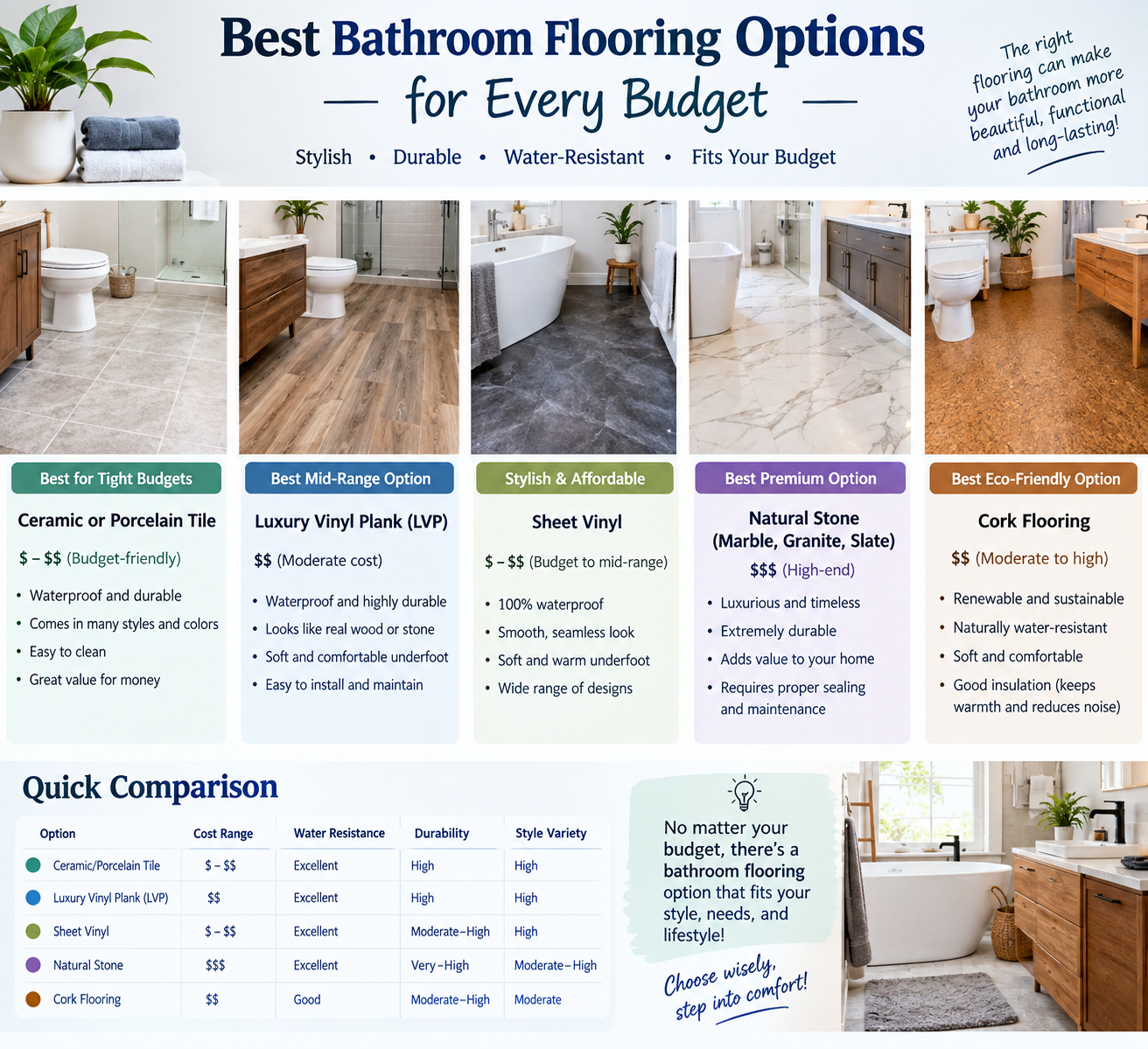
1. Vinyl Flooring – Affordable and Practical
If you are working with a limited budget, vinyl flooring can be an attractive option. It is available in many colors, patterns, and designs, including styles that imitate wood or stone.
Vinyl is also relatively easy to clean and maintain. Some varieties are designed to handle moisture well, making them suitable for many bathroom applications.
One of its biggest advantages is affordability. However, installation requirements and water resistance can vary between products, so always check the manufacturer’s specifications before purchasing.
2. Ceramic Tile – A Versatile Choice
Ceramic tile is one of the most widely used flooring materials for bathrooms. It comes in a huge range of colors, sizes, patterns, and textures, making it easy to find a style that suits your space.
Ceramic tile can also be durable when properly installed and maintained. It offers plenty of design flexibility without necessarily requiring a premium budget.
However, grout lines can require regular cleaning, and some ceramic surfaces may become slippery when wet. For bathroom floors, choose a product appropriate for flooring and wet conditions.
3. Porcelain Tile – Durable and Low-Maintenance
Porcelain tile is another popular bathroom flooring choice. It is known for its durability and low water absorption, making it particularly useful in moisture-prone areas.
Porcelain is available in many finishes, including designs that resemble natural stone, concrete, and wood. This allows you to create a high-end appearance without necessarily using natural materials.
The main downside is that porcelain can cost more than some basic flooring options, and installation may require an experienced professional.
4. Luxury Vinyl Tile – Style Without a Huge Price Tag
Luxury vinyl tile, often called LVT, can provide the appearance of stone, ceramic, or wood while offering a more budget-friendly alternative.
It is available in numerous designs and can be comfortable underfoot compared with some hard flooring materials. Depending on the product, installation can also be relatively straightforward.
If you are considering LVT for your bathroom, pay close attention to the product’s water-resistance specifications and installation instructions.
5. Natural Stone – A Premium Look
Natural stone can give a bathroom a distinctive and luxurious appearance. Materials such as marble, slate, limestone, and travertine are available in different colors and patterns.
Stone flooring can be beautiful and durable, but it generally requires more care than some manufactured alternatives. Certain types of stone are porous and may need sealing to help protect them from moisture and staining.
Natural stone can also be more expensive to purchase and install, making it better suited to larger renovation budgets.
6. Laminate Flooring – Use With Caution
Modern laminate flooring is available in water-resistant designs that can resemble wood or stone. It can be an affordable way to achieve a particular decorative style.
However, bathrooms are challenging environments because of moisture and standing water. Not every laminate product is suitable for bathroom installation.
If you are considering laminate, choose a product specifically approved for the intended bathroom application and follow the manufacturer’s installation requirements carefully.
7. Concrete Flooring – Modern and Minimalist
Concrete flooring can work particularly well in contemporary bathrooms. It provides a simple, industrial appearance and can be customized through different finishes and treatments.
Because concrete is highly durable, it can provide a long-lasting surface when properly installed. However, it can feel hard and cold underfoot, and cracks or moisture-related issues can become problems if installation is not done correctly.
For a polished concrete bathroom, professional installation may be worthwhile.
8. Pebble Flooring – A Natural Touch
Pebble tiles can add a natural, spa-like appearance to a bathroom. They are particularly popular in shower areas and can create an interesting textured surface.
The texture may provide useful traction, but pebble floors also have more grout lines and an uneven surface, which can make cleaning more demanding.
They are best used thoughtfully rather than covering every bathroom surface with them.
9. Cork Flooring – Warm and Comfortable
Cork is a softer flooring material that can feel comfortable underfoot. It also has a naturally warm appearance that can make a bathroom feel more inviting.
However, moisture protection is particularly important when using cork in a bathroom. Only use products and installation systems specifically suitable for the environment.
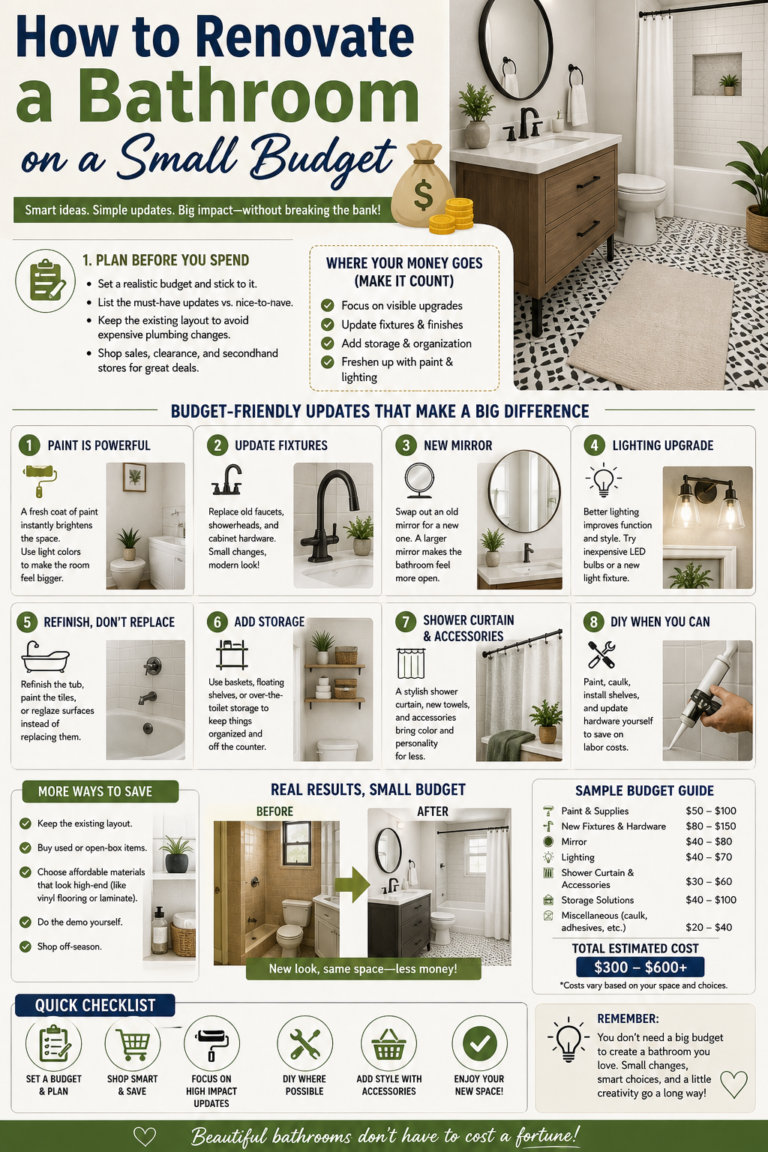
10. Choosing Flooring Based on Your Budget
If your budget is tight, focus on affordable options such as suitable vinyl flooring or basic ceramic tile. These can give you a fresh appearance without requiring a major investment.
With a medium budget, you can consider higher-quality ceramic, porcelain, or luxury vinyl products. These offer more design choices and can provide a durable finish.
For a larger budget, premium porcelain, natural stone, or professionally finished concrete may be worth considering, depending on your preferred style and maintenance expectations.
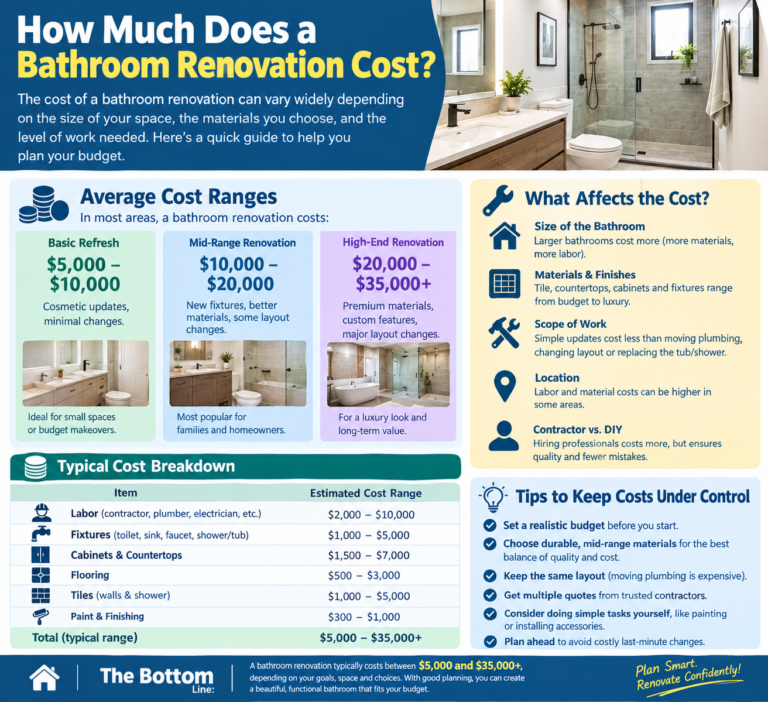
Don’t Forget Installation Costs
When comparing flooring prices, remember that the material is only part of the total cost. You may also need to pay for removing the existing floor, preparing the subfloor, waterproofing, adhesives, grout, trim, delivery, and installation.
A flooring material that looks inexpensive at first can become much more expensive once all additional costs are included.
Think About Safety and Maintenance
Price should not be the only factor when selecting bathroom flooring. Because water can make surfaces slippery, consider products that are appropriate for wet areas and provide suitable traction.
Maintenance is also important. Ask yourself how often you are willing to clean and care for the floor. A material that requires frequent sealing or special cleaning may not be ideal if you prefer a low-maintenance bathroom.
Final Thoughts
There is no single bathroom flooring option that is perfect for every home. The right choice depends on your budget, bathroom conditions, preferred appearance, maintenance expectations, and installation requirements.
For budget-conscious renovations, suitable vinyl and ceramic tile can provide practical and attractive results. Porcelain and luxury vinyl can offer a balance between appearance, durability, and cost, while natural stone and specialty finishes can create a more premium look.
Before making your final decision, compare the full project cost rather than looking only at the price of the flooring itself. Check the manufacturer’s recommendations, consider moisture and slip resistance, and make sure the material is appropriate for your specific bathroom.
With careful planning, you can find a bathroom floor that fits your budget while still creating a space that looks comfortable, stylish, and practical.