How to Choose Bathroom Fixtures and Fittings
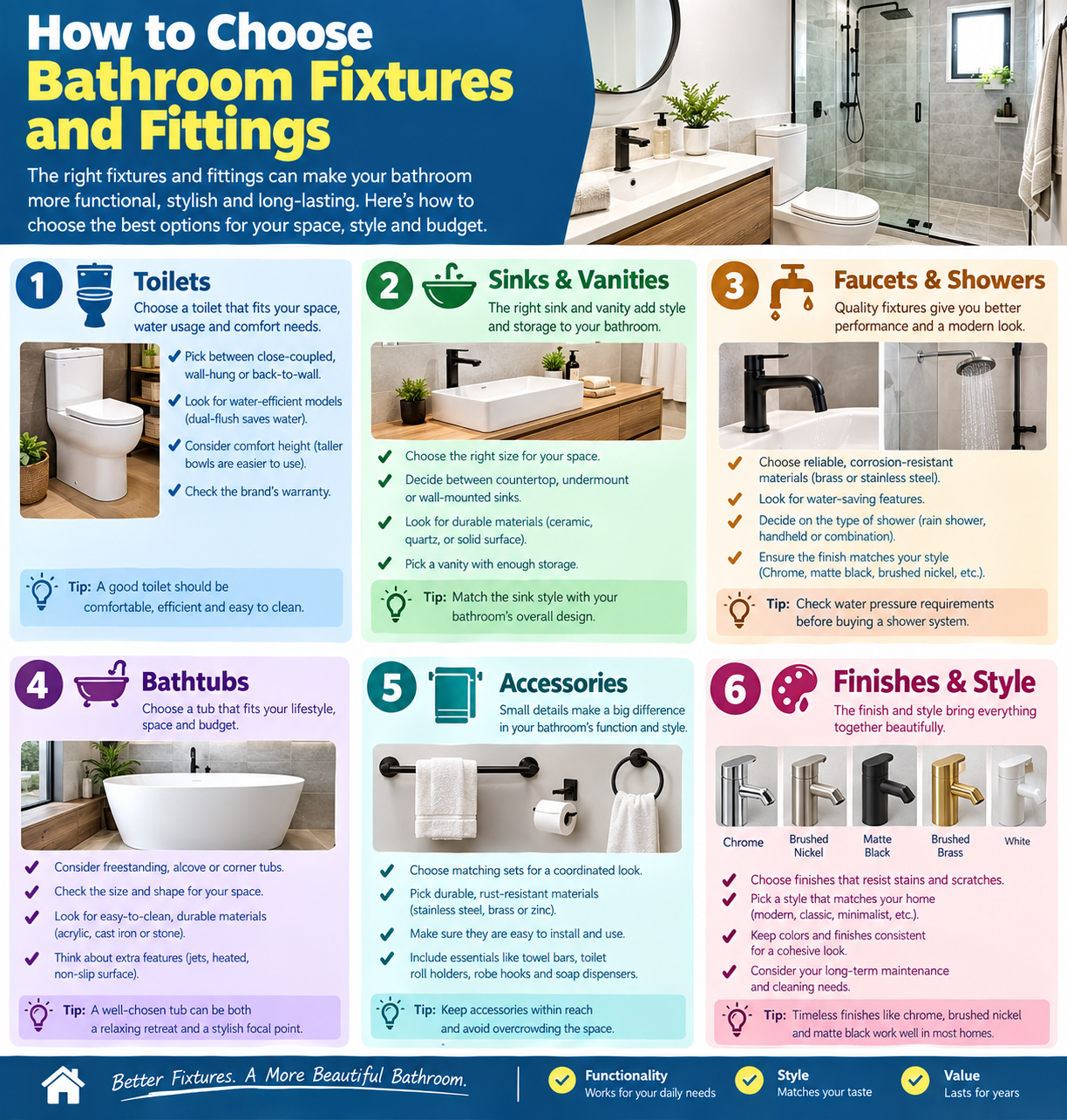
Choosing the right bathroom fixtures and fittings can completely change the look and feel of your bathroom. From the toilet and sink to faucets, showerheads, mirrors, and towel rails, these details affect both the appearance and everyday functionality of the space.
With so many styles, sizes, materials, and prices available, it can be difficult to know where to start. The key is to look beyond appearance and consider how each item will fit your bathroom, how often it will be used, how easy it will be to maintain, and whether it fits your budget.
Here are some practical tips to help you choose the right bathroom fixtures and fittings.
1. Start With Your Bathroom Layout
Before buying anything, look carefully at the available space. Measure the bathroom and note the location of existing plumbing connections, doors, windows, and other fixtures.
The size of the room should influence your choices. A large freestanding bathtub might look beautiful in a spacious bathroom but could make a small bathroom feel crowded.
If your existing layout works well, keeping the major fixtures in their current positions can also help reduce renovation costs.
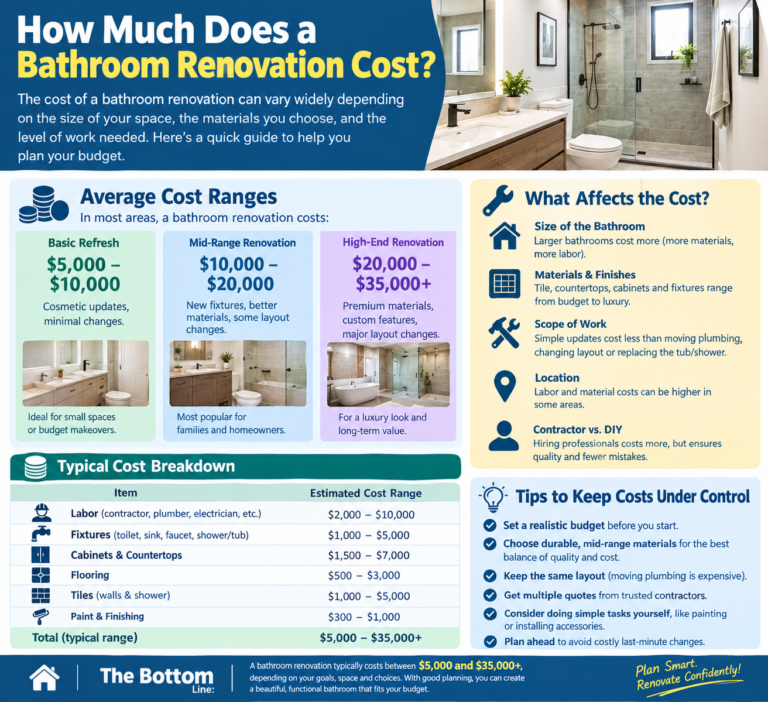
2. Set a Realistic Budget
Bathroom fixtures are available at almost every price level. Before shopping, decide how much you are comfortable spending on the entire project.
Separate your budget into categories such as the toilet, sink, vanity, shower, faucets, lighting, mirrors, accessories, and installation.
Try to leave some money available for unexpected expenses. A clear budget will help you avoid spending too much on one item and running short of money for essential parts of the renovation.
3. Choose the Right Toilet
The toilet is one of the most important fixtures in the bathroom, so choose one based on both comfort and practicality.
Consider the size of the toilet, its shape, installation requirements, cleaning needs, and compatibility with your existing plumbing.
A compact model may be useful in a small bathroom, while a larger design may provide more comfort where space allows. Check the manufacturer’s specifications before purchasing to make sure it is suitable for your bathroom.
4. Select a Suitable Sink
Bathroom sinks come in many styles, including countertop, undermount, pedestal, wall-mounted, and integrated designs.
When choosing a sink, consider the available counter space, the size of the bathroom, and how much storage you need underneath.
A wall-mounted sink can create a more open appearance in a small bathroom, while a vanity with an integrated sink can provide valuable storage.
5. Choose Your Vanity Carefully
A bathroom vanity can provide both style and storage. Before choosing one, measure the available space carefully.
Think about how many drawers or cabinets you need and whether the doors and drawers can open comfortably without hitting another fixture.
The material is also important. Bathroom furniture is exposed to moisture, so choose a product suitable for the environment and follow the manufacturer’s care instructions.
6. Pick the Right Faucet
Faucets are small compared with other fixtures, but they can have a major effect on the appearance of the bathroom.
Choose a style that complements your sink and overall design. Popular finishes include chrome, brushed metal, black, and other decorative options.
Do not choose a faucet based only on appearance. Check that the mounting style, number of holes, connections, and dimensions are compatible with your sink or countertop.
7. Choose a Shower System
When selecting a shower, think about both functionality and personal preference. You may choose a basic showerhead, handheld shower, combination system, or another suitable design.
Make sure the shower fittings are compatible with your existing plumbing and that the water pressure is appropriate for the system you choose.
A handheld shower can also be useful for flexibility and easier cleaning.
8. Consider the Bathtub
If you want a bathtub, think carefully about how often you will use it and how much space it requires.
Freestanding tubs can create a dramatic focal point, while built-in tubs can be more practical for certain layouts.
Measure the available area before purchasing and check whether your bathroom floor and plumbing can accommodate the chosen model.
9. Think About Water Efficiency
Water usage is another factor worth considering. Some modern toilets, faucets, and showerheads are designed to use water more efficiently.
When comparing products, check the manufacturer’s specifications and water-use information where available.
Choosing an efficient fixture can potentially reduce water consumption while still providing the performance you need.
10. Choose Suitable Materials
Bathroom fixtures and fittings are exposed to water, humidity, cleaning products, and regular use. Choose materials that are appropriate for these conditions.
Look for products from reputable manufacturers and check their care and maintenance requirements.
A cheap fitting that deteriorates quickly may cost more in the long run than a reasonably priced product with better durability.
11. Match Your Fixtures
Your bathroom does not have to look perfectly coordinated, but the fixtures should work together visually.
For example, you may want your faucet, shower fittings, cabinet hardware, towel rails, and other metal accessories to have complementary finishes.
A consistent design can make the bathroom look more polished without requiring expensive decoration.
12. Consider Maintenance
Think about how easy each fixture will be to clean. Complicated designs, deep grooves, and difficult-to-reach areas can require more maintenance.
Simple designs are often easier to keep clean. Before purchasing, consider whether you are comfortable with the maintenance the product requires.
Also check the manufacturer’s cleaning recommendations, especially for specialty finishes.
13. Don’t Forget Accessibility and Comfort
A bathroom should be comfortable for everyone who uses it. Consider the height of the sink, toilet, shower controls, and other fittings.
If the bathroom needs to accommodate someone with limited mobility, plan for appropriate clearances, support features, and accessible fixtures from the beginning.
Even if accessibility is not currently required, thoughtful planning can make the bathroom easier to use as needs change.
14. Check Measurements Before Buying
Always check the manufacturer’s dimensions rather than relying on photographs.
Measure the space where the fixture will be installed and compare it with the product dimensions. Remember to consider the space needed to open doors, drawers, shower doors, and cabinets.
This simple step can prevent expensive mistakes.
15. Think About Professional Installation
Some fittings are relatively simple to install, while others require plumbing, electrical, waterproofing, or specialist knowledge.
If you are unsure about installing a fixture, consider hiring an appropriately qualified professional. Correct installation can help prevent leaks, damage, and premature problems.
16. Compare Prices and Warranties
Do not buy the first product you find. Compare several options and consider the total cost, including installation and any additional parts required.
Check the warranty terms as well. A warranty does not replace good quality, but it can provide useful protection against certain manufacturing defects.
Final Thoughts
Choosing bathroom fixtures and fittings is about finding the right balance between style, functionality, durability, comfort, and price.
Start by measuring your bathroom and understanding your existing layout. Set a realistic budget, choose appropriately sized fixtures, check compatibility before purchasing, and consider how easy each item will be to maintain.
You do not need the most expensive products to create an attractive bathroom. With careful planning and thoughtful choices, you can select fixtures and fittings that look good, work well, and suit your space for many years.