How to Choose the Right Bathroom Tiles
Choosing the right bathroom tiles can make a huge difference in how your bathroom looks, feels, aunctions. Tiles are not only a decorative feature; they also protect walls and floors from moisture and everyday wear. With so many colors, patterns, sizes, textures, and materials available, choosing the right option can sometimes feel overwhelming.
The best bathroom tile is not necessarily the most expensive or the most fashionable. It should suit your space, budget, lifestyle, and maintenance preferences. Before you start shopping, take some time to understand what you need from your bathroom tiles.
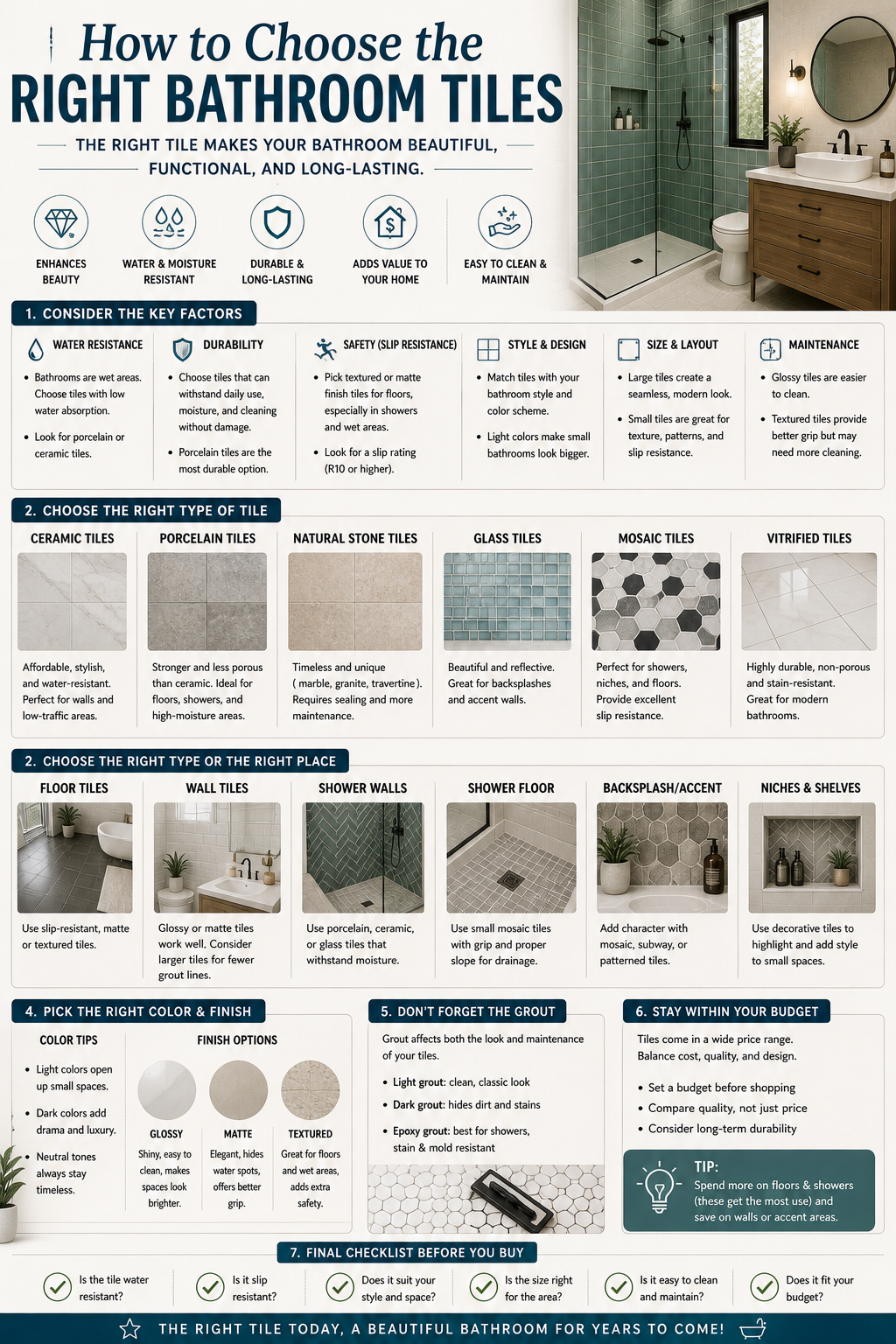
1. Consider Where the Tiles Will Be Used
The first thing to consider is where you plan to install the tiles. Floor tiles and wall tiles do not always have the same requirements.
Bathroom floors are exposed to water and foot traffic, so you need a suitable flooring material with appropriate slip resistance and durability. Wall tiles generally have different demands because they do not experience the same level of foot traffic.
If you are tiling a shower area, choose products specifically suitable for wet environments and follow the manufacturer’s installation recommendations.
2. Choose a Suitable Tile Material
Bathroom tiles are available in several materials, including ceramic, porcelain, natural stone, glass, and other specialty options.
Ceramic tiles are popular because they come in many designs and are often relatively affordable. Porcelain is another common choice and is known for its durability and low water absorption.
Natural stone can provide a luxurious appearance, but some types require more maintenance and may need appropriate sealing. Glass tiles can also create an attractive accent, especially on walls or in decorative areas.
Think about the appearance you want, how much maintenance you are willing to do, and your overall budget before choosing a material.
3. Think About Slip Resistance
Bathroom floors can become wet, so safety should be an important part of your decision. A tile that looks beautiful but becomes very slippery when wet may not be a practical choice for a bathroom floor.
When shopping, check the manufacturer’s specifications and recommendations for floor use and wet areas. You can also consider textured or appropriately rated surfaces where extra traction is needed.
4. Pick the Right Tile Size
Tile size can affect the appearance of the entire bathroom. Large tiles can create a clean, contemporary look and may result in fewer grout lines. Smaller tiles can work well in compact or detailed areas and can provide additional design flexibility.
However, large tiles are not automatically better for every bathroom. The size of the room, the shape of the walls, drainage requirements, and the skill of the installer should all be considered.
5. Choose Colors Carefully
Color plays a major role in creating the atmosphere of your bathroom. Light-colored tiles can make a small bathroom feel brighter and more open, while darker colors can create a dramatic and sophisticated appearance.
Neutral colors such as white, beige, gray, and soft earth tones are popular because they are relatively easy to coordinate with different fixtures and accessories.
If you love bold colors, consider using them as accents rather than covering every surface. This can add personality without making the room feel visually overwhelming.
6. Pay Attention to Tile Texture
Texture can add depth and character to a bathroom. Smooth tiles can create a clean and polished appearance, while textured tiles can provide visual interest.
However, highly textured surfaces may require more cleaning because dirt and soap residue can collect in the grooves. Think about your cleaning routine before choosing a heavily textured tile.
7. Consider Grout Color
Grout is easy to overlook, but it can have a noticeable effect on the finished appearance. A grout color that closely matches the tile can create a more seamless look, while contrasting grout can emphasize the shape and pattern of individual tiles.
For busy bathrooms, consider how easily the grout will show dirt and discoloration. Proper installation and regular maintenance are important regardless of the color you choose.
8. Think About Maintenance
Before falling in love with a particular tile, find out how much maintenance it requires. Some materials are easier to clean and maintain than others.
Ask about cleaning recommendations, sealing requirements, stain resistance, and long-term care. Choosing a tile that fits your lifestyle can make bathroom maintenance much easier.
9. Match the Tiles With Your Bathroom Style
Your tiles should work well with the rest of your bathroom. Consider your vanity, bathtub, shower, faucets, lighting, walls, and accessories when making your choice.
For a modern bathroom, simple large-format tiles and neutral colors may work well. A traditional bathroom might benefit from classic patterns or softer colors. If you prefer a natural appearance, stone-look tiles or earthy tones can create a warmer atmosphere.
You do not have to follow a particular trend. Choose a style that you will be comfortable living with for years.
10. Measure Your Bathroom Before Shopping
Always measure the areas you plan to tile before purchasing materials. Knowing the approximate square footage will help you estimate the quantity you need.
It is generally wise to purchase some additional tiles to account for cuts, breakage, installation mistakes, or future repairs. The exact amount of extra material needed can depend on the tile size, layout, and installation pattern.
11. Set a Realistic Budget
Tile prices can vary significantly. Instead of focusing only on the price per tile, consider the total project cost.
Your budget may need to cover tiles, adhesive, grout, waterproofing materials, trim, delivery, labor, and other installation supplies. A more expensive tile may not necessarily be the best option if it causes you to exceed your overall renovation budget.
12. Order Samples Before Buying in Bulk
A tile can look very different in a showroom, online photograph, or small sample compared with how it looks across an entire bathroom.
If possible, take samples home and view them under your bathroom’s lighting. Place them near your vanity, fixtures, wall colors, and other materials to see whether everything works together.
13. Think About the Future
Bathroom tiles can last for many years, so avoid making a decision based entirely on a temporary trend. You can still create a modern bathroom while choosing materials that are likely to remain appealing over time.
Classic tile colors and simple patterns can provide a strong foundation, while accessories and smaller decorative details can be changed later.
Final Thoughts
Choosing the right bathroom tiles is about finding the balance between appearance, safety, durability, maintenance, and cost. Start by considering where the tiles will be installed, then think about material, size, color, texture, slip resistance, and maintenance.
Most importantly, do not rush your decision. Compare different options, check manufacturer recommendations, measure your space carefully, and consider how the tiles will work with the rest of your bathroom.
With thoughtful planning, the right tiles can transform an ordinary bathroom into a comfortable, attractive, and practical space that you can enjoy for many years.