How Much Does a Bathroom Renovation Cost?
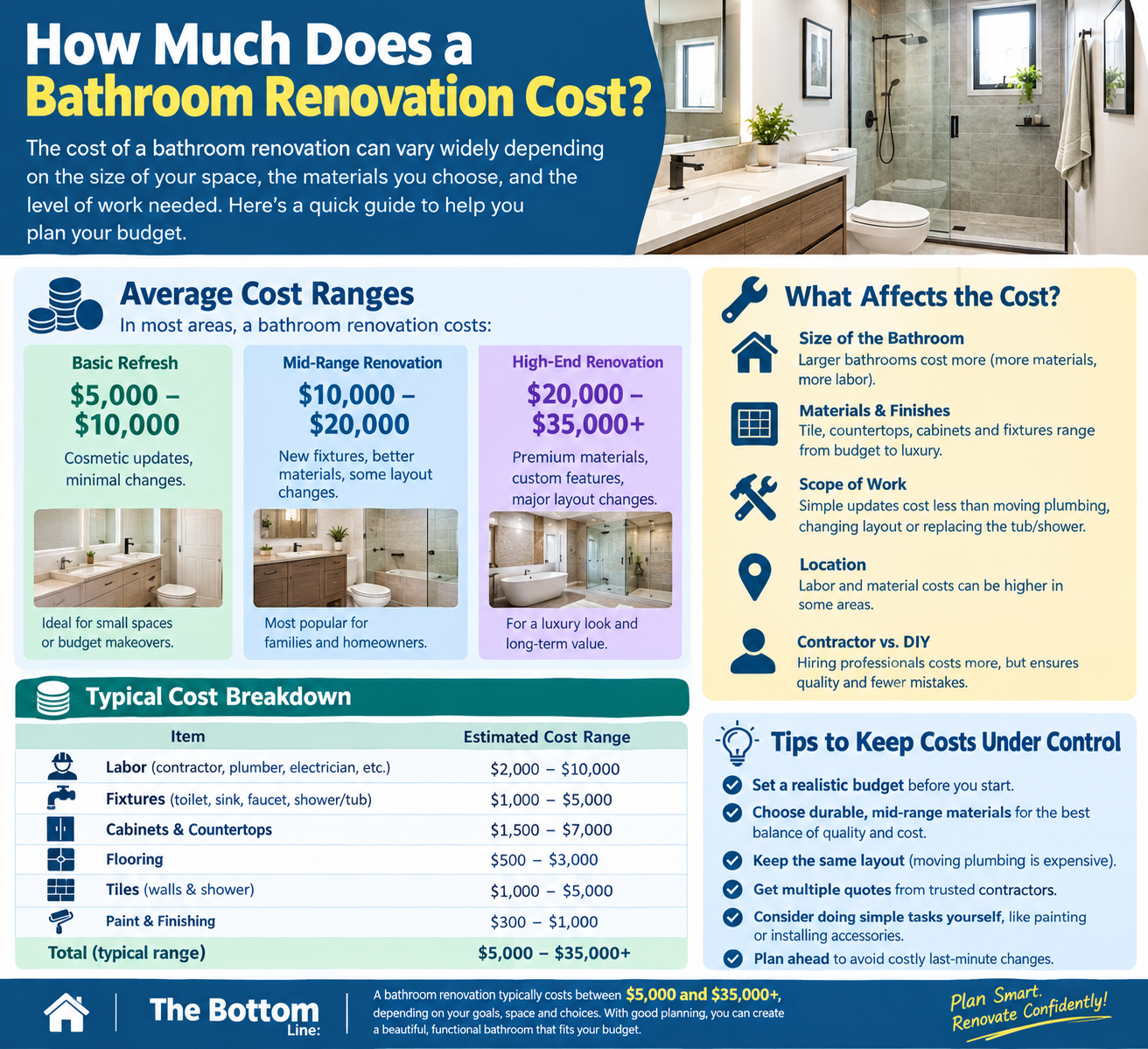
One of the first questions homeowners ask before starting a bathroom renovation is, “How much will it cost?” Unfortunately, there is no single price that applies to every bathroom. The final cost depends on the size of the bathroom, the condition of the existing space, the quality of materials, labor charges, and how much work you want to do.
For homeowners in Nigeria, current 2026 cost guides put a full bathroom renovation at roughly ₦800,000 to ₦3,000,000 in many cases. A simple cosmetic refresh can cost considerably less, while a high-end renovation or a project involving major plumbing changes can go well above this range.
These figures should be treated as budgeting estimates rather than fixed quotations because prices vary by location, contractor, materials, and the condition of the bathroom.
1. Cosmetic Bathroom Refresh
If your bathroom is generally in good condition, you may not need a complete renovation. A cosmetic update could involve repainting the walls, replacing accessories, changing the mirror, updating cabinet handles, installing a new showerhead, or replacing a few fixtures.
This approach can be much cheaper than removing tiles, changing plumbing, and replacing every fixture. Some Nigerian renovation guides estimate a basic cosmetic bathroom refresh at around ₦200,000 to ₦600,000, depending on the materials and amount of work involved.
This is a good option when the bathroom functions properly but looks old or dated.
2. Basic Bathroom Renovation
A more substantial renovation might include new tiles, paint, sanitary fixtures, lighting, minor plumbing repairs, and updated accessories.
Current 2026 Nigerian cost guides commonly place a basic or single-room bathroom renovation in the region of ₦800,000 to ₦1,500,000, although the actual price can be higher or lower depending on the project.
Choosing locally available materials and keeping the existing layout can help keep costs under control.
3. Mid-Range Bathroom Renovation
A mid-range renovation usually involves more extensive improvements. You might replace the floor and wall tiles, install a new vanity, upgrade the toilet and shower, improve lighting, make plumbing changes, and add better storage.
For this type of project, a budget of around ₦1.5 million to ₦3 million may be a reasonable starting point in many Nigerian markets, but you should obtain local quotations before setting a final budget. One 2026 Abuja guide lists bathroom renovations at approximately ₦800,000–₦3 million, illustrating how widely costs can vary.
4. Luxury Bathroom Renovation
Luxury renovations can cost significantly more. Imported tiles, premium sanitary ware, custom cabinetry, high-end faucets, large mirrors, specialized lighting, natural stone, and custom shower systems can all increase the total.
There is no reliable upper limit because luxury projects can be highly customized. Some Nigeria-focused estimates place premium bathroom renovations above ₦5 million, with particularly high-end projects potentially reaching much higher amounts.
If you are planning a luxury bathroom, it is especially important to obtain a detailed quotation for every major item.
5. What Makes Bathroom Renovation Expensive?
Several factors can have a major effect on the final price.
Bathroom Size
A larger bathroom generally requires more tiles, flooring, paint, fixtures, and labor. However, even a small bathroom can become expensive if it requires extensive plumbing or structural work.
Quality of Materials
Tiles, faucets, toilets, showers, vanities, mirrors, and other products are available at many different price points.
Choosing premium materials can significantly increase the overall cost. On the other hand, choosing the cheapest available products may not always be the best long-term decision.
Plumbing
Plumbing can become one of the biggest expenses when you move fixtures or replace old pipework. A 2026 Nigerian plumbing guide estimates bathroom plumbing fit-outs at roughly ₦300,000–₦1.5 million, depending heavily on the sanitary ware and scope of work.
Keeping the existing toilet, sink, shower, and bathtub locations can often reduce the amount of plumbing work required.
Labor
Labor costs depend on the location, complexity of the project, and experience of the workers. You may need different specialists for tiling, plumbing, electrical work, carpentry, painting, and other tasks.
Do not automatically choose the cheapest quote. Make sure you understand what each contractor’s price includes.
6. Tiles and Flooring
Tiles are another major part of the renovation budget. The total cost includes more than just the tiles themselves. You may also need adhesive, grout, spacers, trims, waterproofing materials, and installation labor.
For example, 2026 Nigerian tiling guides show that labor rates vary by location, with Abuja and Lagos generally costing more than some other Nigerian cities.
Before buying tiles, measure the area carefully and account for additional material needed for cuts and potential breakage.
7. Electrical and Lighting Costs
If you are simply replacing a light fixture, the cost may be relatively small. However, adding new electrical points, changing wiring, installing several lights, or modifying switches can increase the budget.
Electrical work should be planned carefully and completed safely by an appropriately qualified professional.
8. Hidden Problems Can Increase the Cost
One of the biggest challenges with bathroom renovations is discovering problems after work begins.
Old bathrooms can sometimes have leaking pipes, damaged surfaces, poor drainage, water damage, deteriorated sealant, or other issues hidden behind walls and floors.
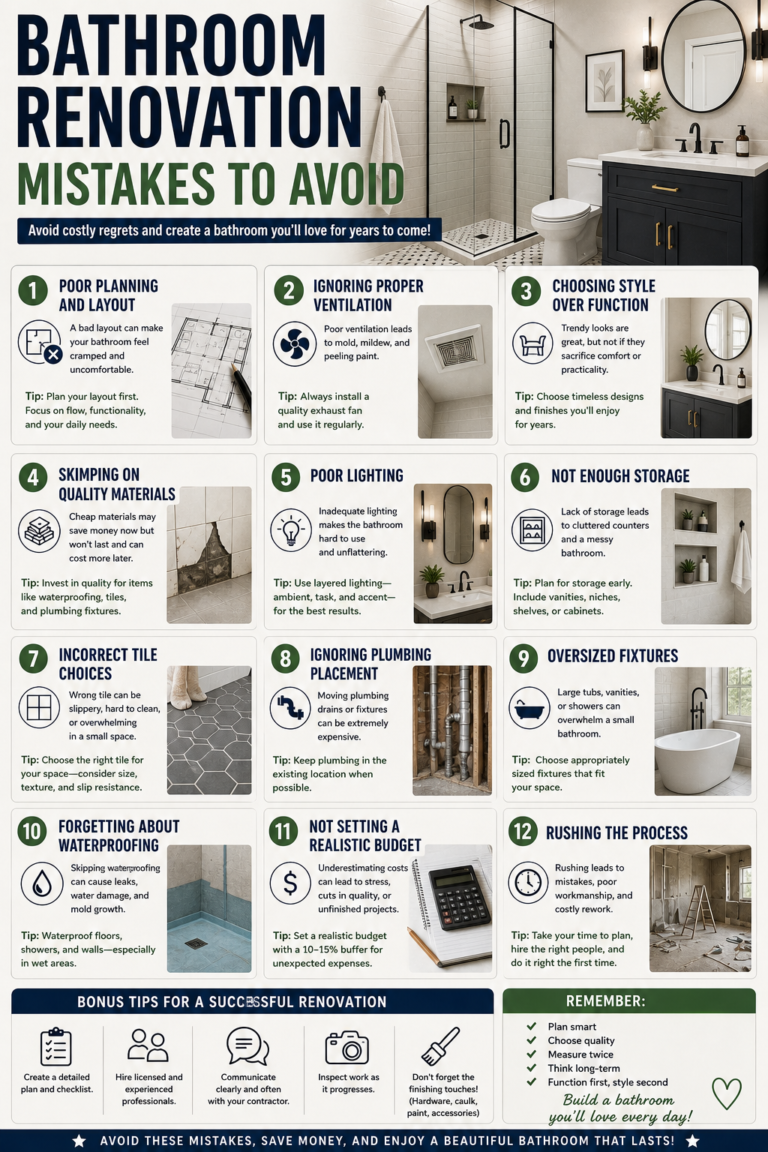
This is why it is sensible to keep a contingency amount in your budget rather than spending every naira on planned improvements.
9. How to Reduce Bathroom Renovation Costs
You do not necessarily need to spend millions to improve your bathroom. There are several ways to control costs.
First, consider keeping the existing layout. Moving plumbing can add significant labor and material expenses.
Second, keep fixtures that are still in good condition. You might only need to replace the faucet, handles, mirror, or other visible components.
Third, compare several suppliers and contractors before making a decision.
Finally, prioritize improvements that make the biggest difference. Fresh paint, better lighting, new fixtures, improved storage, and updated accessories can dramatically change a bathroom without requiring a complete rebuild.
10. Get Multiple Quotes
Before starting a major renovation, ask several contractors for detailed quotations. Make sure the quotes clearly explain what is included.
Ask about materials, labor, demolition, waste removal, plumbing, electrical work, tiling, waterproofing, and finishing. A very low quote may not include important items that another contractor has included.
Comparing detailed quotes makes it easier to understand what you are actually paying for.
Final Thoughts
The cost of a bathroom renovation depends heavily on the scope of the project. In Nigeria, a simple cosmetic update can potentially be completed for a few hundred thousand naira, while a full renovation commonly falls around ₦800,000 to ₦3 million, with premium projects costing considerably more.
The best way to establish a realistic budget is to assess your bathroom, decide what needs changing, choose your preferred materials, and obtain detailed local quotations.
Remember that the cheapest renovation is not necessarily the best one. Focus on good workmanship, suitable materials, proper waterproofing, safe plumbing and electrical work, and improvements that will make the bathroom comfortable and practical for years to come.