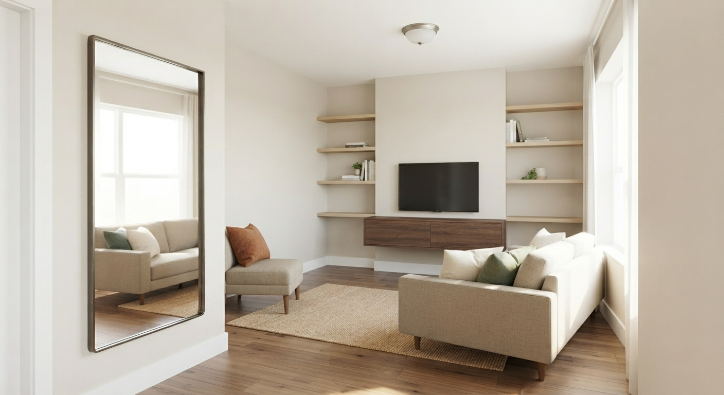
Home Makeover Ideas That Actually Change How a House Feels
There’s a difference between a home renovation and a home makeover, and I think a lot of articles blur the two together. My approach is to treat a makeover as a transformation of look and feel, not a construction project.
You don’t need to move walls or replace flooring to make a home feel noticeably different. What you need is a set of changes that work together instead of sitting in isolation.
That’s the idea behind these home makeover ideas: not one big fix, but several coordinated ones.
Why Cohesion Matters More Than Any Single Change
One thing I’ve noticed while researching home makeovers is that individually strong choices can still fail to add up to a good result if they don’t relate to each other.
A beautifully painted accent wall next to mismatched furniture and outdated lighting still reads as unfinished.
My approach is to pick a direction first, whether that’s a color palette, a material pairing, or a general mood, and let every room level decision support it.
[Internal Link: Beginner Home Improvement Projects]
Living Room
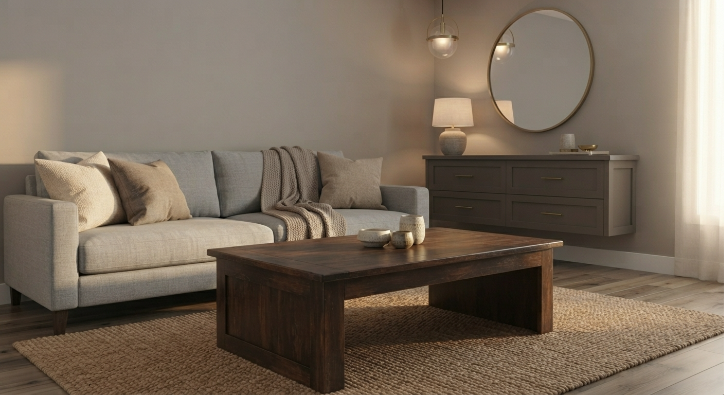
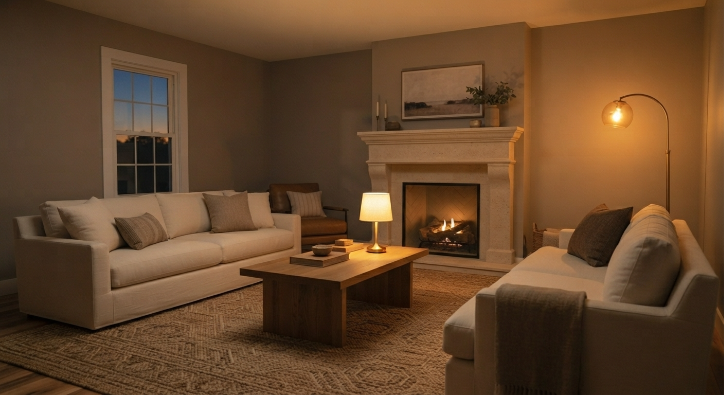
The living room is usually where a makeover shows up most visibly, since it’s the room guests see first.
Rearranging existing furniture to improve conversation flow costs nothing and can transform how the room functions.
Adding a large area rug anchors the seating area and makes furniture feel intentional rather than scattered.
Swapping harsh overhead lighting for a mix of floor lamps and table lamps changes the entire atmosphere of the room in the evening.
[Internal Link: Small Living Room Improvement Guide]
Bedroom
A bedroom makeover often comes down to textiles and layering. New bedding, a textured throw, and updated curtains can shift a room’s entire personality without touching a single wall.
I find it helpful to introduce one unexpected texture, like a woven headboard or a patterned rug, since a bedroom that’s all soft and neutral can start to feel flat.
Kitchen
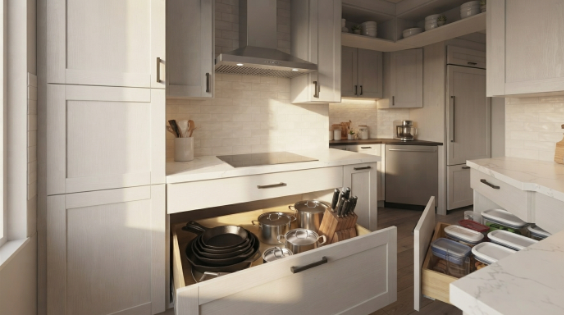
Kitchens are trickier to makeover without renovation, but they’re not impossible.
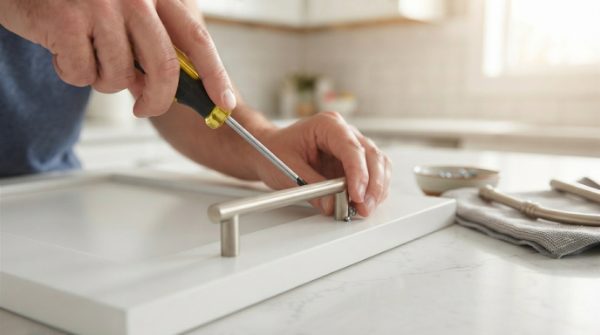
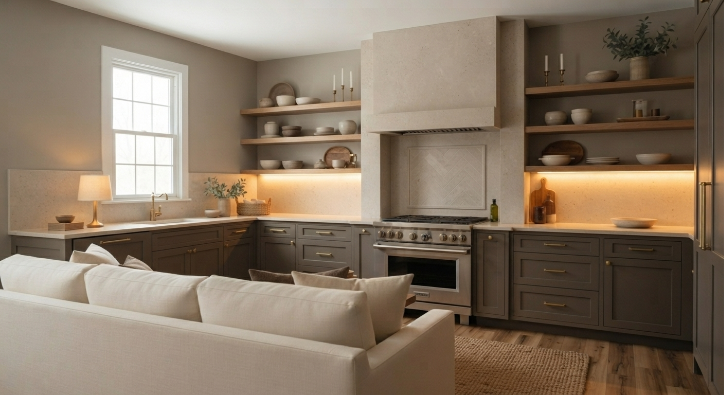
Open shelving in place of upper cabinet doors, a new backsplash, updated cabinet hardware, and better task lighting under the cabinets all shift the room’s character.
Removing visual clutter from countertops does more for a kitchen’s feel than most people expect.
Bathroom
Small changes carry outsized weight in bathrooms because the space is compact. New towels, a matching bath mat, updated fixtures like faucet handles or a showerhead, and a mirror with a more current frame style can transform the room without plumbing work.
Entryway
The entryway sets the tone for the whole home makeover, since it’s the first impression.
A console table, a mirror to bounce light, a bench for shoes, and a light fixture that matches the home’s overall style turn a functional pass through space into a welcoming one.
Home Office
With more people working from home, a home office makeover has become its own category. Also read Home Improvement Ideas for Beginners: How to Actually Get Started.
Good task lighting, a cohesive color scheme that doesn’t clash with the rest of the house, and better cable management all contribute to a space that feels purposeful instead of improvised.
Dining Area
A dining area makeover often centers on lighting. A statement pendant or updated chandelier over the table changes the room’s mood more than almost any other single change. Layering in a runner, updated chair cushions, or a piece of art on the nearest wall completes the refresh.
Outdoor Spaces
Curb appeal counts as part of a home makeover too. A freshly painted front door, updated house numbers, potted plants near the entry, and clean exterior lighting fixtures make a home feel cared for before anyone steps inside.
According to the National Association of Realtors and National Association of the Remodeling Industry’s Remodeling Impact Report, painting projects consistently rank among the improvements real estate professionals most often recommend before a home goes on the market, which reflects how much visual impact paint has relative to its cost.
How Small and Medium Changes Work Together
My approach to combining these ideas is to think in layers: color first, then furniture arrangement, then lighting, then textiles, then decor.
Each layer supports the next. A home makeover built from a random assortment of Pinterest ideas often feels disjointed, while one built in layers tends to feel finished even if only a few rooms were touched.
Lighting as a Makeover Multiplier
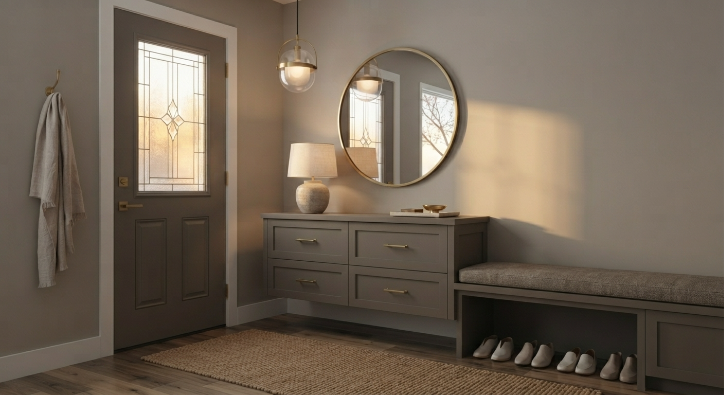
I usually treat lighting as one of the most underused makeover tools. Swapping outdated bulbs for warmer toned LED lighting changes the ambiance of a room instantly, and it’s inexpensive relative to its effect.
The U.S. Department of Energy notes that efficient LED lighting can significantly reduce a household’s electricity costs compared to older incandescent bulbs, which means a lighting focused makeover pays for itself over time in a way that most decor changes don’t.
Real Life Example: A Hypothetical Whole Home Refresh
Consider a hypothetical homeowner who wants their home to feel different without a major renovation.
Over a few weekends, they repaint the entryway and living room in a coordinated palette, rearrange the living room furniture around the fireplace instead of the television, add a large rug, replace outdated ceiling fixtures with warmer LED lighting, and swap kitchen cabinet hardware.
No walls move and no permits are needed, yet the home reads as noticeably transformed because every change reinforces the same visual direction. This kind of layered, cohesive approach is, in my research, what separates a memorable makeover from a scattered one.
Common Mistakes That Undercut a Makeover
Buying decor before settling on a direction is one of the most common missteps I see. Another is ignoring lighting entirely while focusing only on furniture and paint.
A third is treating every room as a separate project instead of letting them share a visual thread, which is what makes a house feel like a cohesive home rather than a set of disconnected rooms.
FAQs
What are affordable home makeover ideas that make the biggest difference?
Paint, lighting upgrades, and furniture rearrangement typically offer the most visible change relative to cost, since they don’t require structural work.
Do I need to renovate to give my home a makeover?
No. A home makeover focuses on visual and functional transformation using existing structure, while renovation involves changing the structure itself.
How long does a typical home makeover take?
It varies by scope, but a room by room makeover can often be completed over several weekends without disrupting daily life.
Which room should I start a home makeover with?
Many homeowners start with the living room or entryway since these spaces have the most visible impact on how the whole home feels.
Can lighting really change how a home looks that much?
Yes. Warmer toned bulbs, layered lighting sources, and updated fixtures noticeably shift a room’s atmosphere, often more than people expect from such a small change.
How do I keep a home makeover from looking disjointed?
Choose a cohesive direction, whether that’s a color palette or material pairing, before buying decor, and apply it consistently across rooms.
What’s the difference between a home makeover and interior design?
A home makeover is typically a homeowner led refresh using accessible changes, while interior design often involves a professional guiding a more comprehensive plan.
Bringing a Makeover Together
Home makeover ideas work best when they’re treated as a connected set of decisions rather than a checklist. Color, lighting, furniture arrangement, and textiles all reinforce one another when there’s a clear direction behind them.
Whether you start with the living room, the entryway, or the kitchen, the goal is the same: a home that feels different in a way people notice, even if they can’t quite say what changed