How to Renovate a Bathroom on a Small Budget
Renovating a bathroom can seem expensive, especially when you look at beautiful bathrooms online and imagine replacing everything from the floor to the ceiling. The good news is that you do not need a huge budget to make your bathroom look cleaner, fresher, and more modern.
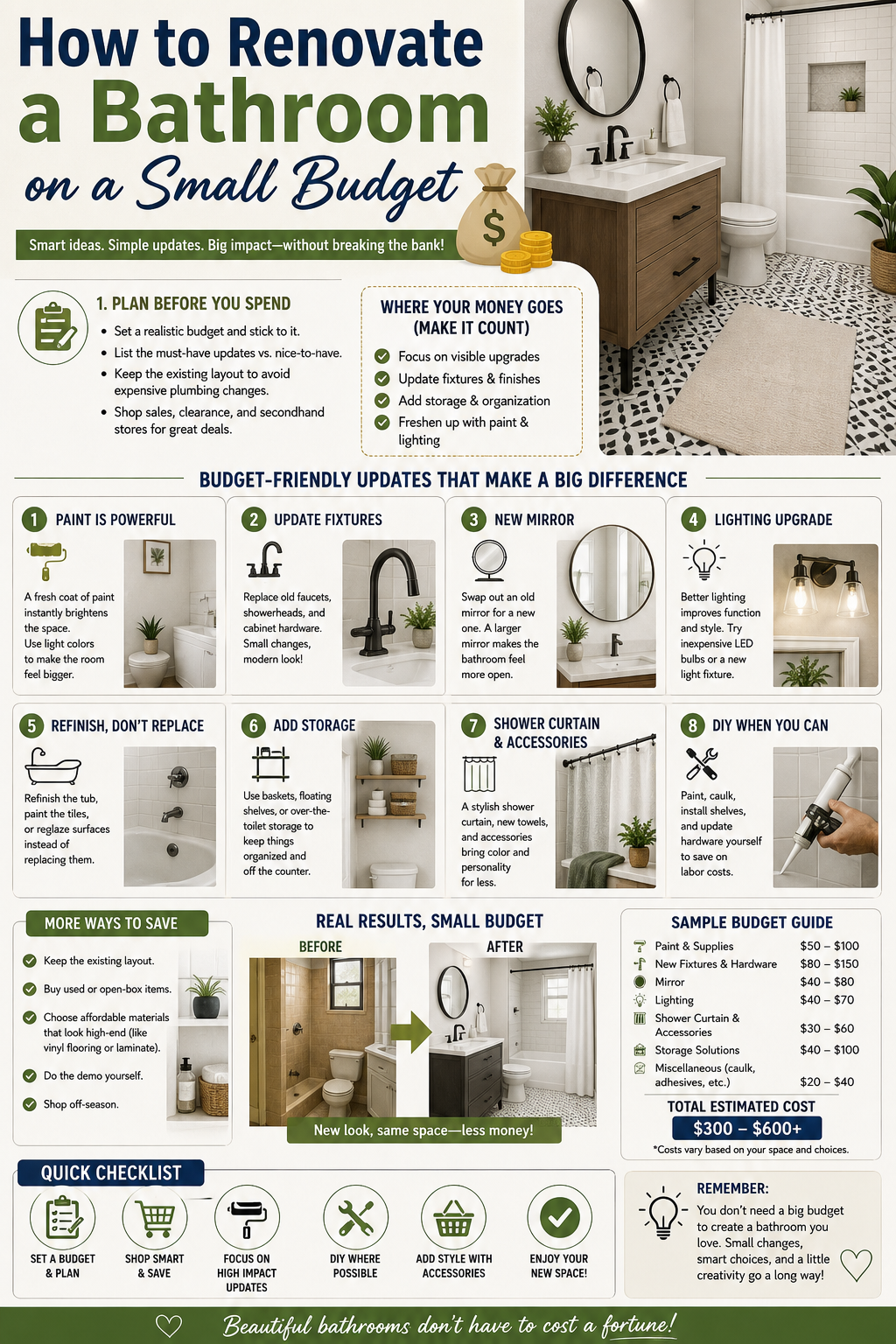
A budget bathroom renovation is mainly about making smart choices. Instead of replacing everything, focus on the areas that make the biggest visual difference. Simple changes such as painting, improving lighting, replacing old hardware, refreshing grout, and adding better storage can completely change the appearance of a bathroom without requiring major construction.
Here are some practical ways to renovate your bathroom while keeping your spending under control.
1. Start With a Realistic Budget
Before buying anything, decide exactly how much you can afford to spend. Write down the amount and divide it between materials, tools, labor, and unexpected expenses.
It is also a good idea to leave some money aside for surprises. Once walls, floors, or plumbing are opened, you may discover problems that were not visible before the renovation.
Make a simple list such as:
- Paint
- Lighting
- Mirror
- Faucets or showerhead
- Storage
- Hardware
- Cleaning and repair materials
- Labor, if necessary
Having a written budget makes it easier to avoid unnecessary purchases.
2. Keep the Existing Layout
One of the easiest ways to save money is to keep your toilet, sink, shower, and other plumbing fixtures where they already are.
Moving plumbing can turn a simple bathroom makeover into a much more expensive project because it may require additional plumbing work, demolition, materials, and labor. Current renovation guidance also identifies plumbing changes as one of the major sources of extra cost.
If the existing layout works reasonably well, there is usually no need to change it just for appearance.
Instead, spend your money on improvements that people can actually see and use.
3. Give the Bathroom a Deep Clean
Before spending money on new products, clean everything thoroughly.
Remove dirt, soap buildup, mold, limescale, and old stains. Clean the tiles, toilet, sink, shower area, floor, mirrors, and fixtures.
You may be surprised by how different the bathroom looks after a serious cleaning.
If the grout is dirty or discolored, cleaning or regrouting it can make old tiles look much better. Regrouting is also being recommended as a relatively inexpensive way to refresh an older shower.
Sometimes the cheapest renovation is simply restoring what you already have.
4. Paint the Walls
A fresh coat of paint is one of the easiest ways to change a bathroom without spending a lot.
Choose a color that works with the size and lighting of the room. Light neutrals such as white, cream, beige, or soft gray can make a small bathroom feel brighter and more open.
You can also use a gentle green or another muted color if you want more personality.
Use paint that is appropriate for humid bathroom conditions, and prepare the surface properly before painting. Repair cracks, clean the walls, and allow surfaces to dry before applying paint.
If the walls and ceiling look tired, repainting both can make the whole bathroom feel newer.
5. Refresh Instead of Replacing the Tiles
Replacing all your bathroom tiles can quickly consume a large part of your budget.
If the existing tiles are structurally sound, consider keeping them.
Start by cleaning the grout thoroughly. If the grout is damaged or badly discolored, replacing it can give the tiles a cleaner appearance.
You can also replace only a few damaged tiles rather than removing an entire tiled wall or floor.
For certain suitable surfaces, tile refinishing products or decorative treatments may provide a cosmetic update. However, these should never be used to hide serious water damage or waterproofing problems.
6. Upgrade Small Fixtures and Hardware
You do not always need a new bathroom suite to make the room look modern.
Small visible details can make a surprisingly big difference.
Consider replacing:
- Old cabinet handles
- Towel bars
- Toilet paper holders
- Faucets
- Showerheads
- Shower curtain rods
- Toilet seats
- Other outdated hardware
Because these items are relatively small, you can often update several of them without spending as much as you would on a major renovation.
Choose finishes that work together instead of mixing too many different styles.
7. Improve the Lighting
Poor lighting can make even a nicely decorated bathroom look dull.
If your current light fixture is old, replacing it can instantly improve the appearance of the room. Better lighting can also make a small bathroom feel more comfortable and functional.
Consider brighter, energy-efficient lighting where appropriate, especially around the mirror.
If electrical work is required, use a qualified professional and follow local electrical requirements. Avoid attempting electrical work that you are not qualified to perform simply to save money.
8. Add a Large or Better-Positioned Mirror
A mirror can make a small bathroom feel more spacious because it reflects light and creates a sense of depth.
If your existing mirror is damaged or outdated, replacing it may give you more visual impact than buying several small decorations.
A simple frameless mirror can create a clean, modern appearance, while a framed mirror can add more character.
If you already have a good mirror, simply cleaning it thoroughly and improving the lighting around it may be enough.
9. Add Affordable Storage
A messy bathroom can look old even when the fixtures are attractive.
Instead of buying expensive cabinets, look for simple storage solutions such as floating shelves, baskets, wall-mounted organizers, or a compact cabinet.
Use vertical wall space whenever possible. This is particularly helpful in small bathrooms because it provides storage without taking up valuable floor space.
Keep frequently used items within easy reach and store less attractive products inside baskets or cabinets.
Good organization can make the bathroom feel larger and more expensive without actually costing much.
10. Replace Soft Accessories
Some of the easiest updates involve items that are not permanently installed.
For example, you could replace:
- Shower curtains
- Bath mats
- Towels
- Soap dispensers
- Toothbrush holders
- Small storage baskets
- Window coverings
Choose a simple color scheme and repeat the same colors throughout the room.
These small details can give the bathroom a coordinated appearance without requiring construction.
11. Focus on One Feature Wall
If you want to add personality without paying to renovate the entire bathroom, focus on one area.
For example, you could update the wall behind the vanity or around the shower with a different tile, color, or decorative finish.
There is no need to cover every wall with expensive materials. Using a more interesting finish in one carefully selected area can create a focal point while keeping material costs under control.
12. Do Simple Work Yourself
If you are comfortable with basic DIY tasks, doing some of the work yourself can reduce labor costs.
Painting, cleaning, assembling certain storage products, changing some accessories, and installing simple decorative items may be suitable for confident DIYers.
However, know where to stop.
Plumbing, electrical work, waterproofing, structural changes, and complicated tile work can cause expensive problems if they are done incorrectly. Saving money upfront is not worthwhile if it creates leaks or safety problems later.
13. Repair Problems Before Decorating
Do not spend your renovation budget on beautiful accessories while ignoring leaks, damaged flooring, poor drainage, mold caused by moisture, or deteriorating waterproofing.
These problems should come first.
A bathroom that looks attractive but has a hidden water problem can become much more expensive to repair later.
Your priorities should generally be:
- Fix leaks and water damage.
- Address plumbing and drainage problems.
- Check ventilation and moisture issues.
- Repair damaged surfaces.
- Improve appearance and decoration.
This approach helps ensure that your budget goes toward improvements that actually last.
14. Shop Carefully
Do not buy the first product you see.
Compare prices from different stores and check whether similar products are available at a lower price. Look for sales, clearance items, standard-size products, and locally available materials.
Avoid choosing extremely cheap products simply because they have the lowest price. A product that fails quickly may cost more in the long run.
The goal is not to buy the cheapest thing available. The goal is to find good value.
15. Make a Priority List
If your budget is very small, you do not have to complete the entire renovation at once.
Create three categories:
Must do:
Leaks, damaged surfaces, broken fixtures, ventilation problems, and other important repairs.
Should do:
Painting, lighting, storage, mirror, and hardware upgrades.
Nice to have:
Decorations, plants, premium accessories, and other optional improvements.
Complete the most important projects first. You can always return to the optional improvements when you have more money.
Common Mistakes to Avoid
A small bathroom renovation can become expensive when there is no clear plan.
Avoid:
- Changing the plumbing layout unnecessarily
- Buying materials before measuring the room
- Choosing oversized fixtures
- Ignoring leaks or moisture problems
- Spending too much on decoration while ignoring repairs
- Buying too many different finishes
- Removing perfectly good tiles without a reason
- Starting electrical or plumbing work without the right skills
The biggest savings often come from deciding what not to replace.
Final Thoughts
Renovating a bathroom on a small budget does not mean accepting an unattractive space. It means being selective about where your money goes.
Start with cleaning and repairs, keep the existing layout when possible, refresh the walls, improve lighting, update visible hardware, add useful storage, and choose a few decorative details that make the room feel personal.
You do not need to replace everything to create a noticeable transformation. A few carefully chosen improvements can make an old bathroom feel cleaner, brighter, more comfortable, and more modern while keeping your renovation costs under control.